Education Board Selector Tool
Your Recommended Path
Key Takeaways
- The CBSE board is a powerhouse in India and the Middle East due to its structured approach.
- IB and Cambridge are the gold standards for international mobility and holistic learning.
- State boards dominate in terms of sheer student volume but often lack global standardization.
- Choosing a board depends on whether the goal is local competitive exams or international university admissions.
When we look at the sheer volume of students, the CBSE syllabus is a standardized national curriculum managed by the Central Board of Secondary Education in India. Because India has one of the largest student populations on earth, the CBSE board is technically one of the most popular in the world by headcount. It serves millions of students across India and in affiliated schools in countries like Oman, UAE, and Nepal. But is it the most popular for someone wanting to study in New York or London? That's where the conversation shifts.
The Heavy Hitters: CBSE vs. ICSE vs. State Boards
In the Indian context, which heavily influences global education trends, you've got three main paths. First, there's the CBSE is a board that focuses on a balanced approach, heavily aligned with national competitive exams . It's the go-to for families aiming for engineering or medical degrees because its textbooks are the foundation for exams like JEE and NEET.
Then you have the ICSE, which is a more comprehensive and detailed curriculum managed by the Council for the Indian School Certificate Examinations . If CBSE is about efficiency and exam prep, ICSE is about depth. It spends more time on English literature and a wider array of subjects, making it popular among those who want a more "liberal arts" feel to their schooling.
Finally, there are State Boards, which are regional education boards that tailor their curriculum to the specific language and culture of an Indian state . In terms of raw numbers, state boards might actually beat CBSE because they cater to the deepest rural pockets of the country. However, they aren't "popular" in the sense of global brand recognition.
| Attribute | CBSE | ICSE | State Boards |
|---|---|---|---|
| Focus | Competitive Exams | Comprehensive Language/Arts | Regional Relevance |
| Difficulty | Moderate | High | Varies by State |
| Global Recognition | High (Asia/Middle East) | High (Global) | Low/Regional |
| Syllabus Rigidity | Standardized | Flexible/Detailed | Local-centric |
The Global Elite: IB and Cambridge
If you move the goalposts to "global popularity" in terms of prestige and university acceptance, the IB, or International Baccalaureate, is a non-profit foundation that offers four programs for students aged 3 to 19 , takes the lead. It's not the most popular by number of students-since it's expensive and requires specialized teachers-but it's the most popular for the global elite. The IB Diploma Programme (DP) is legendary for its rigor, requiring students to write a 4,000-word extended essay and engage in "Theory of Knowledge" (TOK).
Similarly, the Cambridge Assessment International Education is a part of the University of Cambridge that provides a world-renowned curriculum and qualifications . While IB is more about the *process* of learning, Cambridge is often more about the *qualification*. It's widely used in former British colonies and is incredibly popular for students who want a clear, modular path through IGCSEs and A-Levels.
Why choose these over a national board? Because they treat the student as a global citizen. A student moving from a Cambridge school in Singapore to one in Dubai doesn't have to worry about a gap in their learning; the curriculum is identical. This portability is why they are the "most popular" for expats and wealthy urban families.
Matching the Board to the Goal
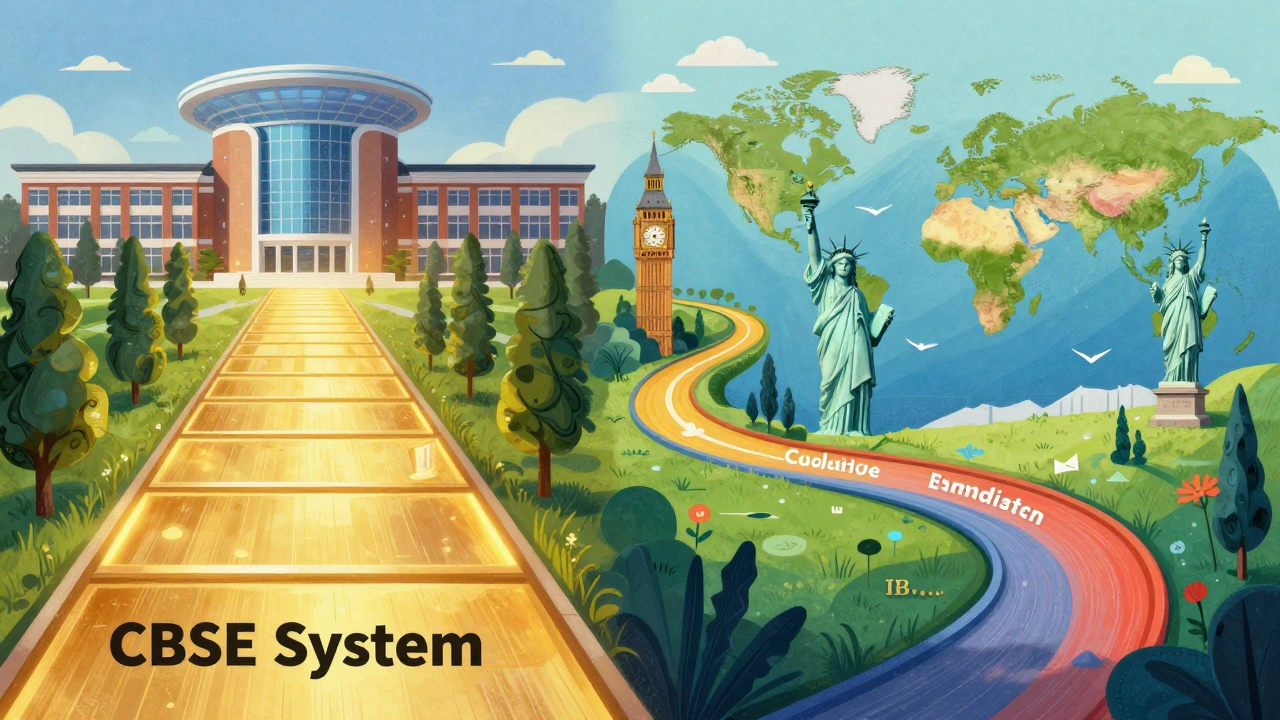
You can't really say one board is "the best" without asking: "What happens after high school?" If you're aiming for an IIT in India, the NCERT (National Council of Educational Research and Training) based textbooks used in CBSE are essentially your bible. Trying to tackle the JEE while studying an IB curriculum is like trying to run a marathon while carrying a suitcase-you can do it, but you're fighting the system the whole time.
On the flip side, if you're eyeing an Ivy League school in the US or a top university in the UK, the IB's emphasis on research and critical thinking gives you a massive edge. Admissions officers love the IB because it proves a student can handle a heavy workload and think independently. The CBSE board is respected, but it's often seen as more "rote-heavy," which can be a disadvantage in interviews that require deep critical analysis.
Common Pitfalls When Choosing a Board
One big mistake parents make is chasing the "trend." Just because a fancy international school in the city is switching to IB doesn't mean it's right for every child. Some students thrive under the structured, predictable nature of CBSE. They like knowing exactly what will be on the test. For them, the open-ended nature of the IB can be a source of anxiety, not inspiration.
Another trap is ignoring the cost. International boards like IB and Cambridge require high tuition fees to pay for specialized teacher training and licensing. If the budget is tight, CBSE provides an incredible education that is recognized worldwide, without the six-figure price tag. You don't need an IB diploma to get into a top-tier global university, though it certainly helps a bit with the application process.
The Future of Board Popularity
We're seeing a weird trend where national boards are starting to steal ideas from international ones. CBSE has been introducing more competency-based questions to move away from rote memorization. They're trying to make the National Education Policy 2020, which is India's blueprint to overhaul the education system to be more flexible and multidisciplinary , a reality. This means that in a few years, the gap between a "national" board and an "international" board might shrink.
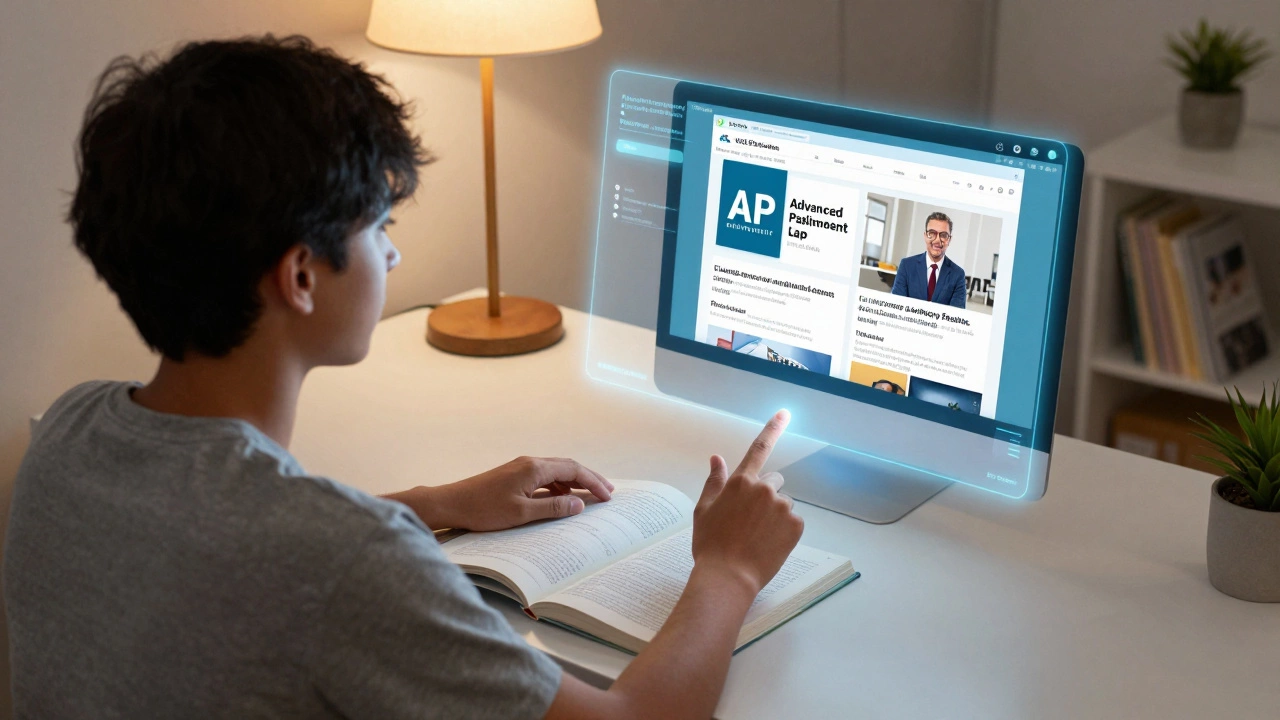
As digital learning grows, the physical location of the board matters less. We're seeing more students mix-and-match. A student might be in a CBSE school but take an online AP (Advanced Placement) course from a US provider to boost their college application. This hybrid approach is becoming the new "most popular" way to learn for the ambitious student.
Is CBSE recognized globally?
Yes, CBSE is widely recognized, especially in Asia and the Middle East. While it is a national board of India, its certificates are accepted by universities worldwide. However, students moving to the US or UK may need to provide additional context or standardized test scores (like SATs) because the grading system differs from Western norms.
Which is harder: CBSE or ICSE?
Generally, ICSE is considered more challenging because of its vast syllabus and heavy emphasis on English language and literature. CBSE is more streamlined and focuses more on core concepts and exam-oriented preparation, which can make it feel "easier" for those focusing on science and math.
Can I switch from CBSE to IB in high school?
Yes, it's possible, but it's a big jump. You'll move from a system of memorization and structured testing to one of research, essays, and independent projects. Most students find the transition takes a full year to adjust to the different way of thinking.
Does the board affect my chances of getting into college?
The board itself doesn't decide your admission, but it shapes your skills. For example, an IB student might find writing a college essay easier, while a CBSE student might be more proficient in solving complex physics problems quickly. Your grades within the board matter most.
What is the most popular board for engineering aspirants in India?
CBSE is the most popular choice because its syllabus is closely aligned with the NCERT books, which form the basis for the JEE Main and Advanced exams. This alignment saves students from having to study two different sets of material.
Next Steps and Troubleshooting
If you're still torn between boards, start by looking at your three-year plan. Are you staying in your home country? If yes, go with the board that aligns with your local entrance exams. Planning to move abroad? Look for schools offering the IB or Cambridge IGCSEs.
For students currently struggling with a board they find too difficult: don't panic. The skills you learn-whether it's the discipline of CBSE or the critical thinking of IB-are transferable. If you feel the rote learning of a national board is stifling you, try incorporating independent reading or online courses in subjects you love to balance things out. If you're overwhelmed by the IB's project-based work, seek out a structured study group to break the massive tasks into smaller, manageable chunks.





0 Comments