
English Speaking Fluency Calculator
Answer these questions honestly to calculate your current fluency level and get personalized recommendations.
Your Fluency Score
0
BeginnerKeep practicing!
Personalized Action Plan
Select your answers and click Calculate to see your results.
It happens to everyone. You know the grammar rules. You have a decent vocabulary in your head. But when someone asks you a question in real life, your mind goes blank, or your tongue trips over simple words. The gap between what you *know* and what you can *say* is frustrating. It feels like your brain is moving faster than your mouth.
You don't need another textbook to fix this. You need a shift in how you use your time. Improving your English speaking skills isn't about memorizing more lists; it's about rewiring your neural pathways for speed and confidence. Whether you are preparing for a job interview in Sydney, trying to connect with friends abroad, or just want to stop translating in your head, the path to fluency is built on action, not theory.
The Trap of Passive Learning
Most people spend years reading and listening but very little time actually producing sound. This creates a passive knowledge base. You recognize words when you hear them, but retrieving them during a conversation feels impossible. Think of it like watching tennis matches all day versus hitting the ball yourself. Watching helps you understand the game, but it won't make you a player.
To speak better, you must treat speaking as a physical skill, similar to playing an instrument or lifting weights. Your mouth muscles need training. Your brain needs to build shortcuts so that "hello" connects directly to the sound /həˈloʊ/ without stopping at your native language first. This process requires active output, even if that output is just talking to yourself in an empty room.
Master the Shadowing Technique
If you only try one new method this week, make it shadowing. This is where you listen to a native speaker-via a podcast, YouTube video, or audiobook-and repeat exactly what they say, almost simultaneously. Don't wait for them to finish the sentence. Jump in right after they start.
- Choose the right material: Pick a clip with clear audio and a speaker whose pace is slightly challenging but understandable. TED Talks or news segments work well because the articulation is usually precise.
- Listen once for meaning: Understand the context before you start mimicking.
- Mimic everything: Copy their rhythm, their pauses, their intonation, and their speed. If they raise their voice at the end of a question, you do too. If they slur two words together, you slur them too.
- Record yourself: Use your phone to record your shadowing session. Listen back immediately. Compare it to the original. You will likely notice differences in stress and tone that you couldn't feel while doing it.
This technique forces your brain to process English in real-time. It bridges the gap between input and output by training your auditory processing and motor skills simultaneously. Do this for ten minutes a day, and within a month, your natural flow will improve significantly.
Stop Translating in Your Head
Translating from your native language to English adds a massive delay to your speech. It also leads to unnatural phrasing because sentence structures often differ between languages. To break this habit, you need to start thinking in English.
Start small. Narrate your day. As you walk to the kitchen, say out loud, "I am walking to the kitchen to get water." As you open the fridge, "The fridge is cold." It sounds silly, but it works. You are forcing your brain to associate objects and actions directly with English words, bypassing the translation step entirely.
Another effective strategy is to label items in your house. Put sticky notes on your mirror, door, and computer with their English names. When you see them, don't think of the word in your native language; think of the English word. Over time, this builds a direct link between the concept and the English term.

Embrace Imperfection and Mistakes
Perfectionism is the enemy of fluency. Many learners stay silent because they are afraid of making grammar mistakes. They rehearse sentences in their heads until they are perfect, which takes too long. By the time they speak, the conversation has moved on.
Native speakers make mistakes all the time. We use fragments. We change our mid-sentence. We forget words. Communication is about getting the message across, not delivering a grammatically flawless essay. If you pause too long to correct a verb tense, you lose the listener's attention. Instead, focus on clarity. If you stumble, keep going. Most listeners care more about what you are saying than how perfectly you say it.
Try setting a "mistake quota." Allow yourself to make five mistakes per conversation without correcting them. This lowers the anxiety barrier and encourages you to take risks. Risk-taking is essential for language acquisition because it pushes you out of your comfort zone.
Find Real Conversational Partners
You cannot learn to swim by reading about water. Similarly, you cannot learn to speak by only studying alone. You need interaction. However, finding partners can be tricky. Here are three reliable ways to connect:
- Language Exchange Apps: Platforms like Tandem or HelloTalk connect you with native speakers who want to learn your language. You split the time: fifteen minutes in English, fifteen minutes in your native tongue. It’s mutually beneficial and low-pressure.
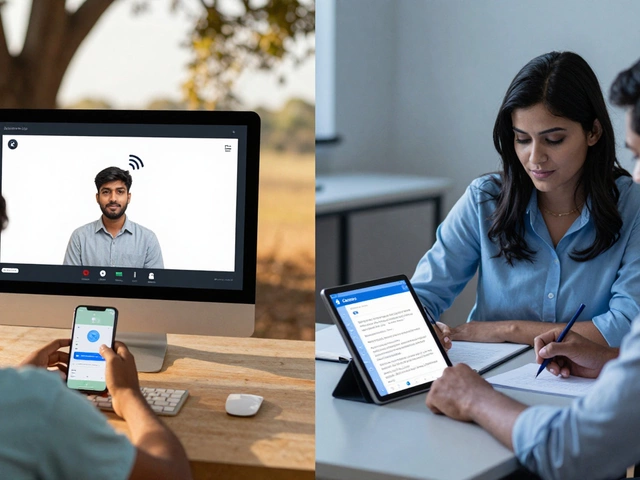
- Online Tutoring: Services like iTalki or Preply offer affordable sessions with community tutors. These aren't formal classes; they are casual conversations focused on keeping you talking. You can prepare topics beforehand, such as discussing a recent movie or asking for advice on travel.
- Local Meetups: Check platforms like Meetup.com for English conversation groups in your city. In places like Sydney, there are numerous social clubs dedicated to language learning. Being face-to-face adds body language cues, which help with comprehension.
When you engage with these partners, ask them to correct you gently. Tell them upfront: "Please stop me if I make a major error, but let me finish my thought first." This ensures you get feedback without feeling interrupted constantly.

Focus on Pronunciation, Not Just Vocabulary
Having a large vocabulary means little if people cannot understand you. Pronunciation issues often stem from unfamiliar sounds or stress patterns. English is a stress-timed language, meaning the rhythm comes from emphasizing certain syllables and words, rather than counting beats evenly.
Pay attention to "schwa" sounds (/ə/). This is the most common vowel sound in English, found in unstressed syllables like the "a" in "about" or the "e" in "taken." Mispronouncing the schwa makes you sound robotic. Also, work on linking words. Native speakers blend words together. "Check it out" becomes "check-it-out." "Want to" becomes "wanna." Listening for these links and practicing them will make your speech sound smoother and more natural.
| Issue | Example | Correction Strategy |
|---|---|---|
| Schwa Misuse | Pronouncing every vowel clearly | Identify unstressed syllables and reduce them to a soft "uh" sound. |
| Word Stress | PHOto vs phoTOgraph | Learn the stressed syllable for each new word. Use online dictionaries with audio. |
| Linking | Saying "stop" and "it" separately | Practice blending consonant-end words with vowel-start words ("stop-it"). |
Create an Immersive Environment
You don't need to move to London or New York to immerse yourself. You can create a micro-immersion environment at home. Change the language settings on your phone and computer to English. Follow English-speaking influencers on social media. Watch Netflix shows with English subtitles, not subtitles in your native language.
Why English subtitles? Reading your native language while hearing English reinforces the translation habit. Reading English subtitles helps you connect the spoken word to its written form, improving both listening and spelling. Eventually, turn off the subtitles entirely to challenge your listening comprehension.
Listen to podcasts during your commute or chores. Choose topics you genuinely enjoy, whether it's true crime, technology, or comedy. Interest drives retention. If you are bored, you won't absorb the language. If you are engaged, your brain will naturally pick up phrases and idioms.
Track Your Progress with Voice Memos
Progress in language learning is often invisible day-to-day. You might feel stuck for weeks. Recording yourself provides objective evidence of improvement. Once a week, record a two-minute monologue on a specific topic. For example, "My favorite holiday memory" or "What I learned this week."
Save these recordings. After three months, listen to your first recording and then your latest one. You will likely hear a dramatic difference in fluency, hesitation, and pronunciation. This validation keeps you motivated when you feel discouraged. It proves that consistent effort yields results.
How long does it take to become fluent in English?
Fluency is subjective, but with consistent daily practice of 30-60 minutes, most learners see significant improvement in conversational ability within 3 to 6 months. True fluency, where you can discuss complex topics effortlessly, may take 1-2 years depending on your starting level and intensity of study.
Is it better to study grammar or practice speaking first?
For speaking improvement, prioritize practice. While basic grammar knowledge prevents major misunderstandings, excessive grammar study slows down speech. Focus on acquiring chunks of language (phrases) rather than isolated rules. You can refine grammar later as your speaking confidence grows.
What should I do if I run out of things to say?
Use filler phrases to buy time, such as "That's an interesting question," or "Let me think about that for a second." Ask follow-up questions to shift the focus back to the other person. This keeps the conversation flowing and gives your brain time to formulate the next response.
Can I improve my accent without a tutor?
Yes, through self-study using the shadowing technique and phonetic resources. Online tools like YouGlish allow you to search for words and see how native speakers pronounce them in various contexts. Consistent mimicry and recording yourself are key to reducing your accent independently.
Should I watch movies with subtitles?
Initially, yes, but use English subtitles, not your native language. This helps connect sound to text. As your listening improves, gradually remove subtitles to train your ear to catch nuances, slang, and fast-paced dialogue without visual aids.




0 Comments