Python Beginner Progress Simulator
Your Learning Journey
Choose your weekly commitment to see what you can accomplish
What You Can Build
Week 1
EasyCreate your first Python program
Print hello world, basic calculations, simple automation
Week 3
IntermediateBuild small applications
Calculator, to-do list, file renamer
Week 6
AdvancedCreate useful tools
Weather checker, daily quote email, basic web scraper
Week 12
ChallengingBuild real projects
Personal budget tracker, simple game, data analysis tool
If you're just starting out and wondering which coding language to learn first, you're not alone. Thousands of people ask this every year. The truth? There’s no single "best" language-but there’s one that makes the most sense for most beginners in 2026. And it’s not what you might think.
Why Python is the top choice for beginners
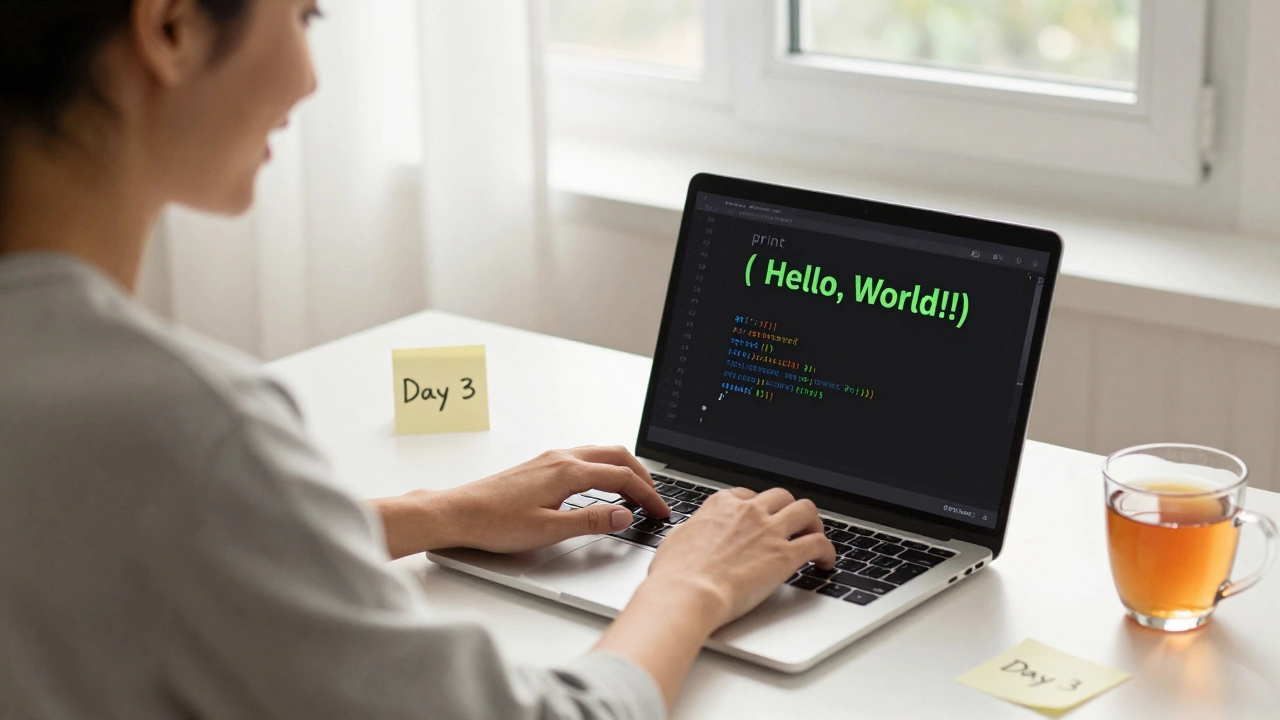
Python is the most popular language for people starting out. Why? Because it reads like plain English. You don’t need to memorize strange symbols or worry about semicolons. Writing a simple program to print "Hello, World!" takes one line:
print("Hello, World!")
Compare that to Java or C++, where you need to set up classes, define types, and manage memory just to say hello. Python removes the noise. You focus on logic, not syntax.
In 2025, Stack Overflow’s annual developer survey showed that Python was the most-used language among beginners, with 73% of new coders choosing it as their first. Why? Because it works. You can build a website, analyze data, automate tasks, or even control a robot-all with Python.
Companies like Google, Netflix, and Instagram use Python heavily. That means the skills you learn today are used in real jobs tomorrow.
What you can do with Python as a beginner
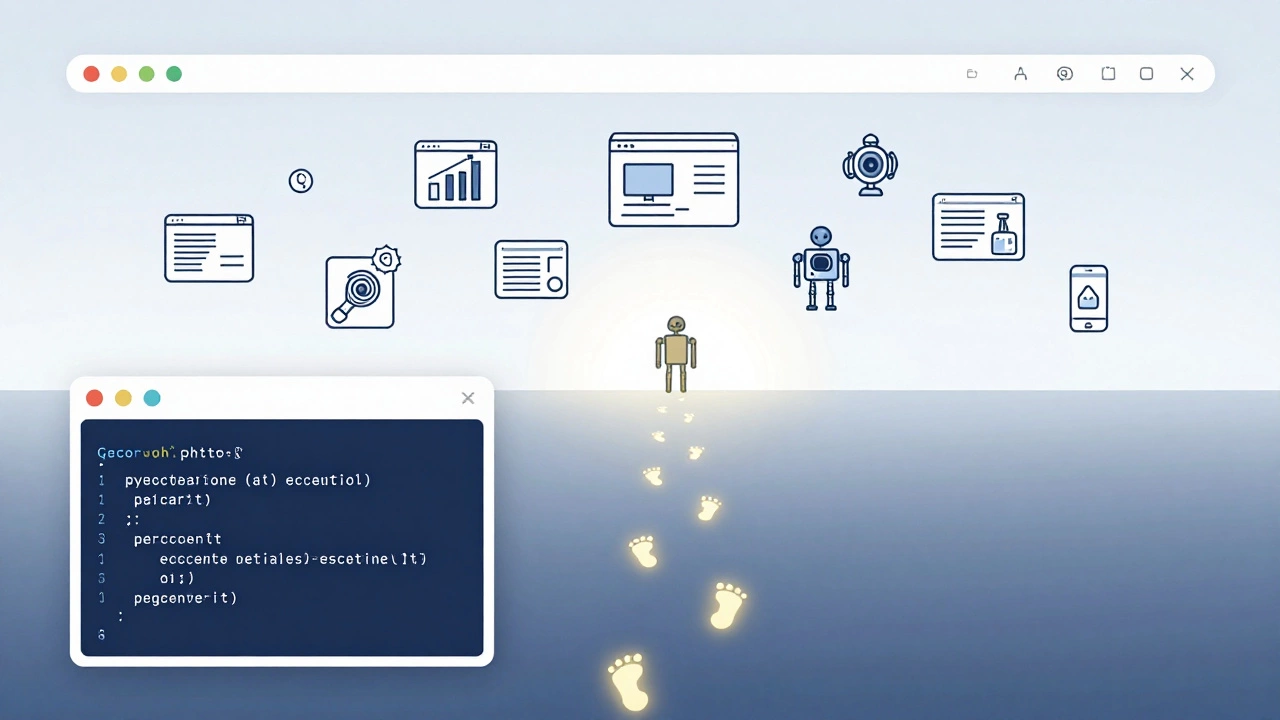
You don’t need to wait years to build something useful. In your first week, you can write a script that renames 100 files automatically. In two weeks, you can create a simple calculator or a to-do list app. By month three, you’re scraping weather data or building a personal budget tracker.
Here’s what real beginners build in their first 30 days:
- A script that sends you a daily motivational quote via email
- A program that downloads all your Spotify playlists as MP3 files
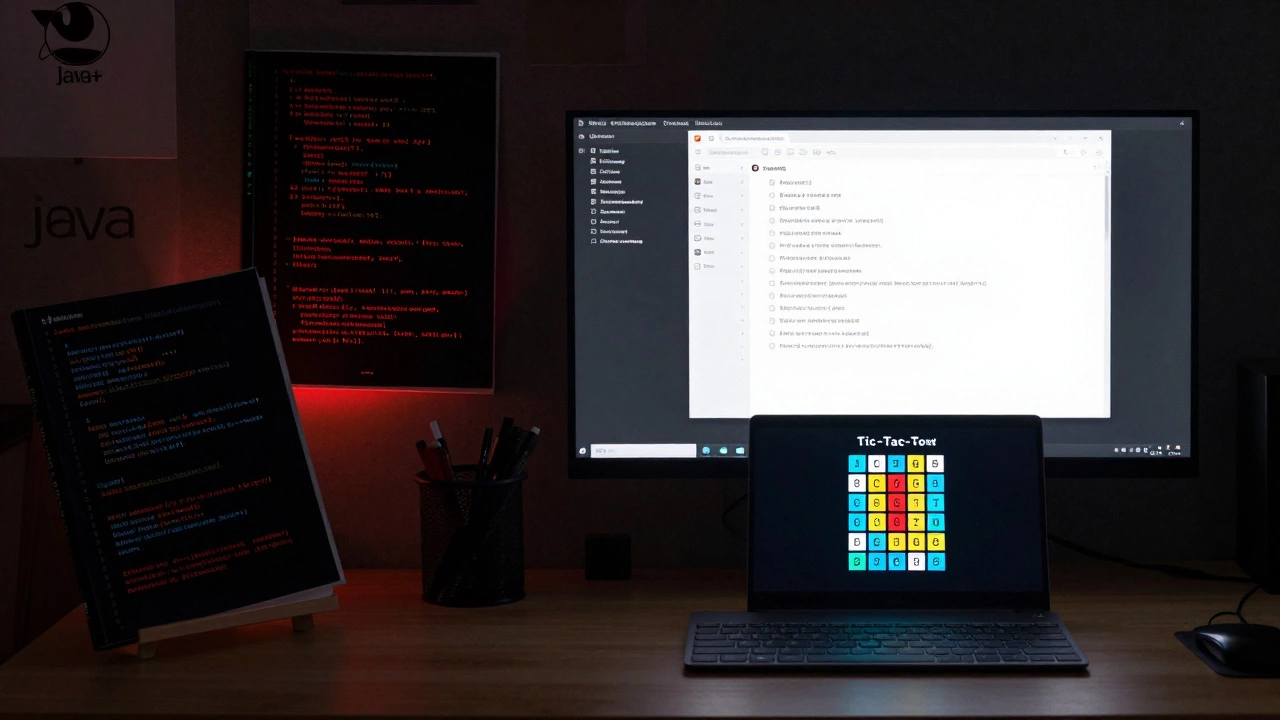
- A simple game like Tic-Tac-Toe you can play in the terminal
- A tool that checks if your favorite online store has a sale
These aren’t fancy apps. But they’re real. And they give you proof you’re learning. That’s what keeps people going.
Other languages beginners consider-and why they’re harder
People often ask: "What about JavaScript?" or "Isn’t Java better for jobs?" Those are fair questions. But they come with hidden costs.
JavaScript is everywhere on the web. But as a first language, it’s messy. One line of code can work in a browser but crash on your phone. You need to learn HTML and CSS just to see your code do anything. That’s three languages at once.
Java is used in big companies and Android apps. But it’s heavy. You need to write this to print "Hello":
public class Main {
  public static void main(String[] args) {
    System.out.println("Hello, World!");
  }
}
That’s five lines just to say hello. And you have to understand classes, methods, and access modifiers before you even get to the logic. Not ideal when you’re still learning what a variable is.
C++ and C# are powerful, but they’re designed for performance-critical systems. They’re like learning to drive a race car before you’ve mastered parking. You’ll get frustrated fast.
What Python doesn’t do well (and when to switch later)
Python isn’t perfect. It’s slower than C++ or Rust for heavy tasks. It’s not the best for mobile apps (though you can still build them). It’s not used much in game engines like Unreal.
But here’s the thing: you don’t need to do all those things as a beginner. You need to build confidence. Python gives you that. Once you’re comfortable, switching to another language is easy. The logic stays the same. You’re just learning new syntax.
Many beginners start with Python, then move to JavaScript for web work, or SQL for databases. That’s normal. The goal isn’t to pick the "right" language forever. It’s to pick the one that gets you started without burning you out.
How to start learning Python today
Here’s a simple path that works:
- Go to python.org and download Python 3.12 (the latest stable version).
- Install IDLE (it comes with Python) or use Thonny (a beginner-friendly editor).
- Do the first 3 hours of freeCodeCamp’s Python course on YouTube. No paywall. No signup.
- Write one small program every day. Even if it’s just adding two numbers.
- Join r/learnpython on Reddit. Ask questions. People are helpful.
You don’t need a degree. You don’t need a $500 course. You just need to show up and type.
Common mistakes beginners make (and how to avoid them)
Most people quit because they do the wrong things. Here’s what not to do:
- Don’t watch 20 hours of tutorials without coding. Watching ≠ learning. Code every day, even for 15 minutes.
- Don’t chase frameworks. Don’t jump into Django or Flask until you know how to write a loop.
- Don’t compare yourself to YouTube coders. They’ve been coding for years. You’re on day one. That’s okay.
- Don’t wait for "perfect" conditions. You don’t need a new laptop. You don’t need silence. Just open your terminal and start.
The biggest barrier isn’t intelligence. It’s patience. Python is forgiving. It lets you make mistakes and still move forward. That’s why it’s the best starting point.
What comes after Python?
Once you’re comfortable with Python-say, after 3-6 months-you’ll naturally want to do more. Maybe you want to build a website? Then learn HTML, CSS, and JavaScript. Want to analyze data? Learn SQL and Pandas. Want to make apps? Try Kivy or BeeWare.
But here’s the secret: once you know one language well, learning others gets easier. The concepts-variables, loops, functions, conditions-are the same. You’re just translating them into a new dialect.
Think of it like learning Spanish, then French. The grammar changes. The words change. But your brain already knows how to learn a language.
Python is your Spanish. It’s the foundation. Everything else builds on it.
Final thought: It’s not about the language. It’s about the habit.
The best coding language for beginners isn’t the fastest, the most popular, or the highest paying. It’s the one that keeps you coding.
Python does that. It doesn’t punish you for typos. It doesn’t force you to learn 10 new rules before you can do anything. It lets you build, fail, fix, and try again.
Start here. Stay consistent. In six months, you’ll look back and wonder why you ever doubted yourself.
Is Python really the best for absolute beginners?
Yes, for most people. Python’s simple syntax lets you focus on problem-solving instead of memorizing rules. It’s used in schools, bootcamps, and tech companies worldwide. Over 70% of new coders start with Python, and they’re more likely to stick with it than those who start with harder languages.
Can I learn Python without any prior experience?
Absolutely. No math, no engineering degree, no computer science background is needed. All you need is curiosity and the willingness to type a few lines every day. Many people with zero tech experience have landed their first coding job after learning Python for 6 months.
How long does it take to get good at Python?
You can write useful programs in 30 days. You’ll feel confident in 3-6 months with consistent practice. "Good" means different things: automating tasks? That’s 100 hours. Building apps? 500+ hours. The key isn’t speed-it’s showing up every day.
Should I learn HTML and CSS before Python?
No. HTML and CSS are for building websites. Python is for logic and automation. If your goal is to build websites, learn Python first. Once you understand programming, HTML and CSS will feel much easier. Trying to learn them together confuses most beginners.
What if I get stuck and can’t solve a problem?
Everyone gets stuck. That’s normal. Use Google. Search the exact error message. Check Stack Overflow. Ask in r/learnpython. Most problems have been solved before. The trick isn’t knowing everything-it’s knowing how to find answers. That’s a skill you’ll build with practice.





0 Comments