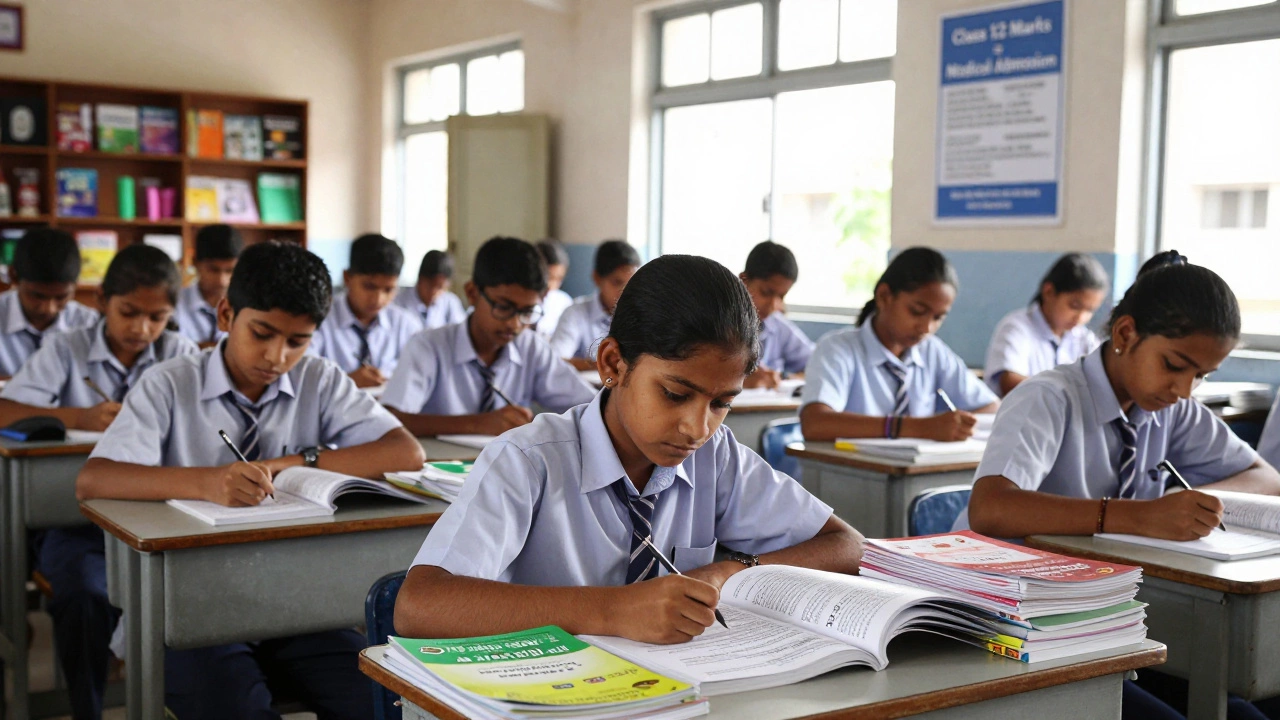
For over a decade, the National Eligibility cum Entrance Test (NEET) has been the single gateway for admission to undergraduate medical courses across India. Introduced in 2013 and made mandatory in 2016, NEET replaced state-level exams and private university tests with one standardized test. But not everyone accepted it. While most states went along, a few have fought back - not just with protests, but with legal challenges, legislative moves, and public campaigns. If you're trying to understand why some states refuse to play by NEET’s rules, you need to know the real reasons behind their resistance.
Why Do Some States Oppose NEET?
At first glance, NEET seems fair: one test, one level playing field. But for states like Tamil Nadu, West Bengal, and Punjab, it’s not about fairness - it’s about control. These states had well-established, state-specific entrance exams that were designed with local education systems in mind. Their syllabi, language of instruction, and student demographics didn’t match the national pattern. When NEET came in, they lost the power to shape how their own students entered medical colleges.
Take Tamil Nadu, for example. Before NEET, the state used the Tamil Nadu Professional Courses Entrance Examination (TNPCEE). It was based on the state board syllabus, which is different from CBSE. Tamil Nadu’s students typically studied in Tamil-medium schools, where concepts were taught differently than in English-medium CBSE schools. Suddenly, NEET forced them to compete with students who had access to expensive coaching centers, private tutors, and CBSE-aligned study materials. The result? A sharp drop in admissions from Tamil Nadu government schools into top medical colleges.
A 2021 study by the Madras Medical College found that students from Tamil Nadu’s state board schools had a 68% lower chance of clearing NEET compared to CBSE students from the same district. That’s not a gap in talent - it’s a gap in access.
Tamil Nadu: The Strongest Holdout
Tamil Nadu is the most vocal opponent of NEET. In 2017, the state assembly passed a resolution demanding the scrapping of NEET. In 2020, it passed the Tamil Nadu Medical Education and Research Act, which proposed an alternative state-level exam. The central government ignored it. So the state took legal action.
In 2023, the Madras High Court ruled that NEET violated the state’s right to regulate education under Article 243W of the Constitution. The ruling was stayed by the Supreme Court, but Tamil Nadu didn’t back down. In 2024, it began offering a parallel admission process for 100% of its state quota seats - using class 12 marks and a state-designed aptitude test. The central government called it illegal. The state called it justice.
Today, over 90% of medical seats in Tamil Nadu are filled without NEET scores. The state even provides free coaching to students from rural areas, focusing on NCERT-based content adapted to local teaching methods. It’s not anti-NEET - it’s pro-equity.
West Bengal: A Quiet Rebellion
West Bengal’s resistance is quieter but just as firm. The state used to run the WBJEE (West Bengal Joint Entrance Examination), which included biology, physics, and chemistry - but also a section on Bengali language and regional health issues. NEET wiped that out.
In 2022, the West Bengal government filed a petition in the Supreme Court arguing that NEET disproportionately hurt Bengali-medium students. They pointed out that 72% of government school students in the state were taught in Bengali, and most NEET coaching centers operated only in English or Hindi. The court didn’t overturn NEET, but in 2023, West Bengal started offering a state-sponsored NEET prep program with free study material in Bengali. It’s not a replacement - it’s damage control.
Still, the state refuses to promote NEET as the only path. Government websites don’t display NEET registration links prominently. School counselors are instructed to mention alternatives. It’s a slow burn, but it’s working.
Punjab: The Cultural Argument
Punjab’s opposition is different. It’s not about language - it’s about culture. Punjab has one of the highest rates of medical aspirants in India, but also one of the lowest rates of private coaching access. Most families can’t afford ₹1.5 lakh per year for NEET coaching. The state’s rural schools have no labs, no internet, and no access to mock tests.
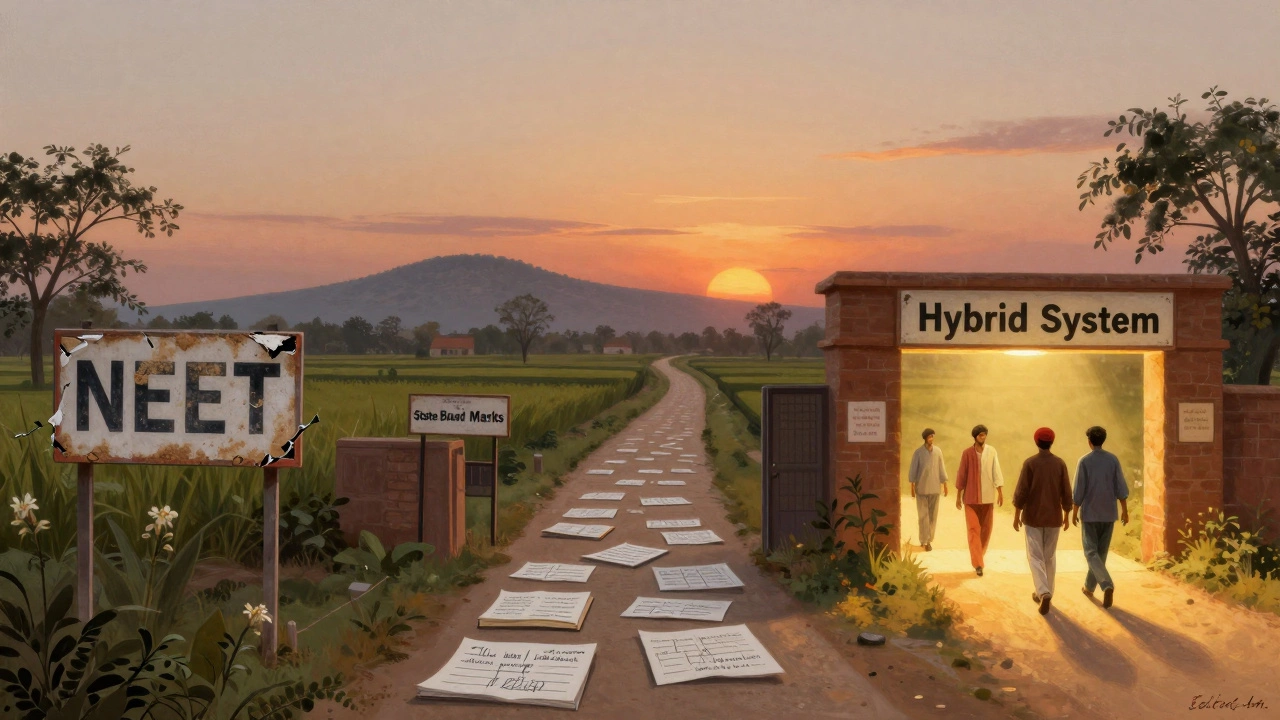
In 2021, Punjab’s education minister said: “We don’t want our children to be forced into a system that favors urban elites.” The state proposed a hybrid model: 50% weightage to state board marks, 50% to a simplified entrance test. The central government rejected it.
Now, Punjab has stopped publishing NEET cut-off lists for its state quota. It quietly prioritizes students from government schools with high class 12 scores. The result? In 2025, 63% of Punjab’s MBBS admissions came from students who didn’t crack NEET but had top marks in their state board. The system isn’t perfect - but it’s working for them.
Other States with Mixed Stances
Chhattisgarh, Jharkhand, and Odisha have not outright rejected NEET, but they’ve built layers around it. They run their own entrance exams as backup. If a student fails NEET, they can still get into state medical colleges using their state exam scores. It’s a safety net - and it’s growing.
Andhra Pradesh and Telangana used to support NEET, but after the 2024 protests by student groups over coaching inequality, both states began funding free NEET prep centers in every district. They still use NEET for admissions, but they’re trying to level the playing field.
The Real Issue: Inequality, Not Exam Integrity
Most supporters of NEET argue it ensures uniformity and prevents corruption. But the real problem isn’t corruption - it’s access. NEET is a test designed by CBSE, for CBSE students, with coaching materials written for urban, English-speaking households. It doesn’t account for:
- Students who learn in regional languages
- Schools without labs or internet
- Families that can’t afford ₹10,000/month coaching fees
- Students who work part-time to support their families
States like Tamil Nadu, West Bengal, and Punjab aren’t against standardization. They’re against a system that ignores their reality. They’re not trying to lower standards - they’re trying to raise access.
What Does This Mean for Students?
If you’re from Tamil Nadu, West Bengal, or Punjab, your path to medical school might not go through NEET - at least not directly. You might get in through state board scores, state-specific tests, or a combination of both. Don’t assume NEET is your only option. Check your state’s medical education department website. Many states now have clear guidelines on alternative routes.
And if you’re from a state that fully accepts NEET - don’t think you’re safer. The pressure is higher. Coaching centers are everywhere. Fees are rising. The competition is fiercer. NEET didn’t make medical education fairer - it just made it louder.
Is There a Way Forward?
Some experts suggest a two-tier system: NEET for All India Quota seats (15%), and state-designed exams for state quota seats (85%). That’s already how it works for engineering (JEE Main + state exams). Why not for medicine?
India has 700+ medical colleges. Over 90% are state-run. It makes no sense for a student in rural Odisha to be judged by a test designed in Delhi. The solution isn’t to scrap NEET - it’s to make room for state autonomy within a national framework.
Until then, the resistance continues. Not because these states hate exams. But because they care about their students too much to let them fail on a test that wasn’t built for them.
Which states have officially banned NEET for medical admissions?
No state has legally banned NEET, as it is mandated by the National Medical Commission (NMC). However, Tamil Nadu, West Bengal, and Punjab have created alternative admission pathways for state quota seats that do not rely on NEET scores. These states use class 12 marks and state-designed aptitude tests to fill their medical college seats.
Can I get into a medical college in Tamil Nadu without NEET?
Yes. Tamil Nadu fills 100% of its state quota seats without using NEET scores. Admissions are based on class 12 marks (70%) and a state-conducted aptitude test (30%). Students from government schools are given additional weightage. The state also provides free coaching and study material in Tamil.
Why is NEET considered unfair by some states?
NEET is based on the CBSE syllabus and is primarily taught in English. Students from state board systems - especially those in rural areas or non-English medium schools - often lack access to coaching, practice materials, and test prep. Studies show these students have significantly lower success rates, not due to lack of ability, but due to systemic disadvantages.
Do students from opposition states have lower chances of getting into medical colleges?
No. In fact, states like Tamil Nadu and Punjab have maintained or even improved their medical admission rates by using alternative methods. Tamil Nadu’s government schools now send more students to medical colleges than they did under NEET. The key is using local data and context - not a one-size-fits-all national test.
What should I do if I live in a state that opposes NEET?
Check your state’s medical education department website. Many states now publish clear guidelines on how to apply for state quota seats without NEET. Focus on excelling in your board exams and look for state-sponsored preparatory programs. Don’t assume NEET is your only path - especially if you’re from Tamil Nadu, West Bengal, or Punjab.




0 Comments