
JEE Self-Study Mastery Tracker
Your Mastery Overview
Track your topics using the 'Traffic Light' system: Red (Struggling), Yellow (Shaky), Green (Mastered).
Key Takeaways for Self-Study Aspirants
- Self-reliance builds deeper conceptual clarity than rote learning from coaching modules.
- Free digital resources now rival the quality of expensive offline institutes.
- The biggest hurdle isn't the lack of a teacher, but the lack of a structured schedule.
- Consistent practice with previous year papers is the only true way to gauge readiness.
The Myth of the Coaching Monopoly
There is a common belief that without a specialized institute, you're walking into a battle without a sword. We see billboards of toppers who attended the same three or four giant coaching hubs, and it feels like the game is rigged. However, if you look closer at the data from the Joint Entrance Examination, you'll find students from remote villages and small towns who topped the ranks using only NCERT books and old library archives. Why does this happen? Coaching centers provide two things: a curated path and a competitive environment. They don't give you a "magic formula" for physics; they just give you a schedule so you don't have to think about what to study next. When you go the self-study route, you take over the role of the manager. You decide the pace, you identify your own weaknesses, and you avoid the "herd mentality" where everyone studies the same way regardless of their individual strengths.The Toolkit: What You Actually Need
If you aren't paying for a classroom, you need to build your own ecosystem. You can't just wing it. You need a core set of materials that are non-negotiable. First, the NCERT (National Council of Educational Research and Training) textbooks are your bible. Most students ignore them because they look "too simple," but the official textbooks used in Indian schools are where the examiners pull the conceptual traps for the exam. If you can't explain a concept in NCERT terms, you don't actually know it. Beyond the basics, the digital era has leveled the playing field. Platforms like Khan Academy or various specialized YouTube channels offer high-quality breakdowns of complex topics for free. You don't need a $2,000 course when the same physics laws are explained for free by experts globally. The key is to pick one reliable source per subject to avoid "resource overload," which is a common trap where students spend more time collecting PDFs than actually solving problems.| Feature | Self-Study Route | Coaching Center Route |
|---|---|---|
| Pace of Learning | Customized to your speed | Fixed by the batch |
| Cost | Near zero (Books/Internet) | High tuition fees |
| Problem Solving | Deep dive into logic | Pattern recognition/Shortcuts |
| Stress Level | Internal pressure/Isolation | External peer competition |
Mastering the Three Pillars: Physics, Chemistry, and Math
Each subject requires a different mental approach when you're studying alone. For Physics, the mistake most self-studiers make is jumping straight to complex problems. You need to visualize. If you're studying electromagnetism, don't just memorize the formula; try to imagine the field lines. Use simulation tools online to see how variables change in real-time. This creates an intuitive understanding that coaching students-who are often taught "shortcuts"-completely miss. Chemistry is a different beast. It's split into Physical, Organic, and Inorganic. Inorganic chemistry is essentially a memory game; you need a system of flashcards or active recall to keep the properties of elements fresh. Organic chemistry, on the other hand, is like a puzzle. Instead of memorizing every single reaction, focus on the mechanisms-the "why" behind how electrons move. Once you understand the mechanism, you can predict the outcome of a reaction you've never seen before. Then there's Mathematics. This is where most self-study attempts fail because math requires sheer volume of practice. You can't "read" a math book; you have to bleed on the page. The goal is to reach a point where you see a problem and immediately recognize which tool (integration by parts, substitution, etc.) to use. This comes from solving the same problem three different ways until the logic becomes second nature.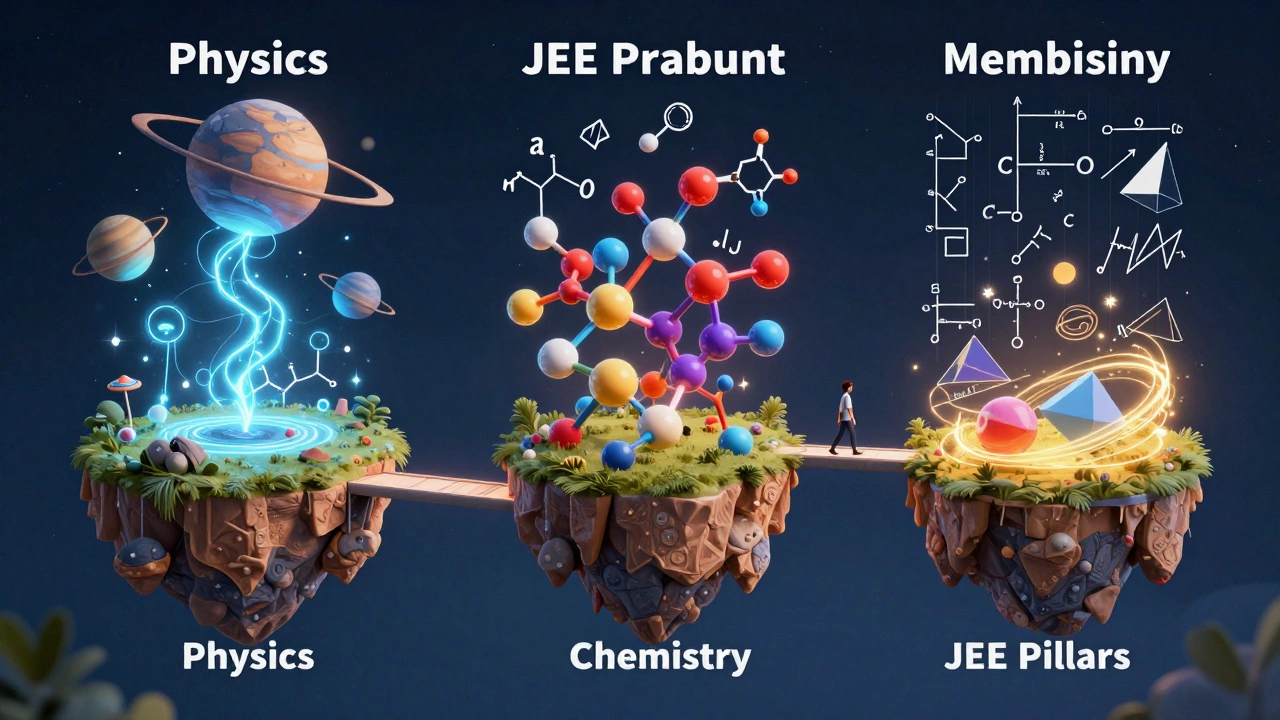
The Strategy of the "Ghost Student"
One of the hardest parts of studying without coaching is the lack of a benchmark. How do you know if you're actually improving or just getting good at easy problems? This is where the "Ghost Student" strategy comes in. You need to simulate the exam environment exactly. Every Sunday, from 9 AM to 12 PM, sit in a quiet room with no phone, no music, and a timer. Take a full-length JEE Main previous year paper. The goal isn't to get a perfect score initially; the goal is to train your brain to handle the stress and the clock. After the test, spend the next four hours analyzing every single mistake. Did you miss the question because of a conceptual gap, a calculation error, or poor time management? This analysis is where the actual learning happens. Coaching centers do this for you via weekly tests, but doing it yourself forces you to be honest about your weaknesses.Overcoming the Mental Game and Isolation
Let's be real: studying for one of the hardest exams in the world alone is lonely. You don't have a cohort of peers to vent to or a teacher to pat you on the back. This isolation can lead to burnout or a sudden drop in motivation. To fight this, you need to find a "virtual tribe." Join online forums or study groups where students share their progress. However, be careful-avoid the groups that only discuss "which book is best" or "how many hours did you study." Those are distractions. Look for communities that discuss specific hard problems. Solving a difficult physics problem with a stranger halfway across the country provides the same intellectual stimulation as a classroom discussion, without the social anxiety.
Common Pitfalls to Avoid
Many students start with great intentions but fall into the "Resource Trap." They buy five different books for every subject and spend their time comparing the index pages instead of solving problems. Stick to one primary source (NCERT) and one advanced reference book. Quality over quantity always wins in JEE prep. Another mistake is ignoring the "boring" parts. It's easy to spend all your time on the topics you love-like Mechanics in Physics-while ignoring Thermodynamics because it feels tedious. A coaching center forces you to cover the syllabus; as a self-studier, you must be your own strict taskmaster. Create a spreadsheet of every topic in the syllabus and mark them as Red (don't understand), Yellow (shaky), or Green (mastered). Your goal is to turn everything Green, regardless of how boring the topic is.Can I really crack IIT without any coaching at all?
Yes, absolutely. Many students do this every year. The exam tests your conceptual understanding and problem-solving ability, not whether you attended a specific center. The key is access to the right materials (NCERT, previous papers) and a disciplined daily routine.
How do I create a study schedule without a teacher?
Start by breaking the entire syllabus into weekly goals. Assign one topic to each subject per week. Ensure you spend 60% of your time solving problems and 40% on theory. Use a digital calendar or a physical planner to track your progress and hold yourself accountable.
What are the best free resources for JEE preparation?
NCERT textbooks are essential. For video lectures, YouTube channels like Physics Wallah (early videos) or Khan Academy provide great foundations. For practice, downloading the official previous year question papers (PYQs) from the NTA website is the most valuable free resource available.
How do I handle the lack of a competitive environment?
Use online mock test platforms that provide a national rank. Seeing where you stand among thousands of other students gives you the same competitive drive as being in a physical coaching center. Join focused study groups on Discord or Reddit to discuss complex problems.
Isn't the syllabus too vast to cover alone?
The syllabus is vast, but it's the same for everyone. The advantage of self-study is that you don't waste time on "filler" lectures. You can skip what you already know and spend double the time on your weak areas, which actually makes your preparation more efficient than a one-size-fits-all classroom approach.



0 Comments