
Find Your Perfect English Speaking App
Your Learning Profile
Recommended Tool
Select your preferences and click "Find My Best App" to see our recommendation.
You know the vocabulary. You understand the grammar rules. But when someone asks you a question in real life, your mind goes blank. This is the classic "passive knowledge" trap that millions of learners face. Reading textbooks won't fix this. You need to speak. The problem isn't a lack of resources; it's finding the right tool to push you from silence to speech without breaking the bank or your confidence.
In 2026, the market is flooded with options. Some promise fluency in weeks using gamification. Others offer human tutors on demand. Which one actually works for *you*? It depends entirely on what kind of barrier you are trying to break: fear of judgment, lack of feedback, or simply not having enough time.
Key Takeaways
- For pure pronunciation: Apps with instant AI feedback like Elsa Speak provide the most precise correction.
- For conversational flow: Platforms connecting you with native speakers, such as Preply, offer realistic social interaction.
- For shy beginners: AI-driven chatbots allow you to practice 24/7 without the anxiety of human judgment.
- Cost matters: Subscription fatigue is real. Free tiers often limit speaking features to push paid upgrades.
- Consistency beats intensity: Ten minutes daily is better than two hours once a week.
The Core Problem: Why You Need Active Output
Most people learn English passively. They watch Netflix, read news articles, and listen to podcasts. This builds input skills. However, speaking requires output skills, which involve muscle memory in your mouth and rapid cognitive processing. Think of it like driving. You can read every manual about how a car works, but until you sit in the driver's seat and steer, you cannot drive.
The best app for you is the one that forces you to produce sound. If an app only lets you tap multiple-choice answers, it is not helping you speak. Look for features labeled "voice recognition," "speech-to-text accuracy," or "live conversation." These are the markers of tools designed for active output.
AI-Powered Pronunciation Coaches
If your main issue is sounding unclear or being misunderstood due to accent issues, AI coaches are your best bet. These apps use phoneme-level analysis to tell you exactly where your tongue should be placed.
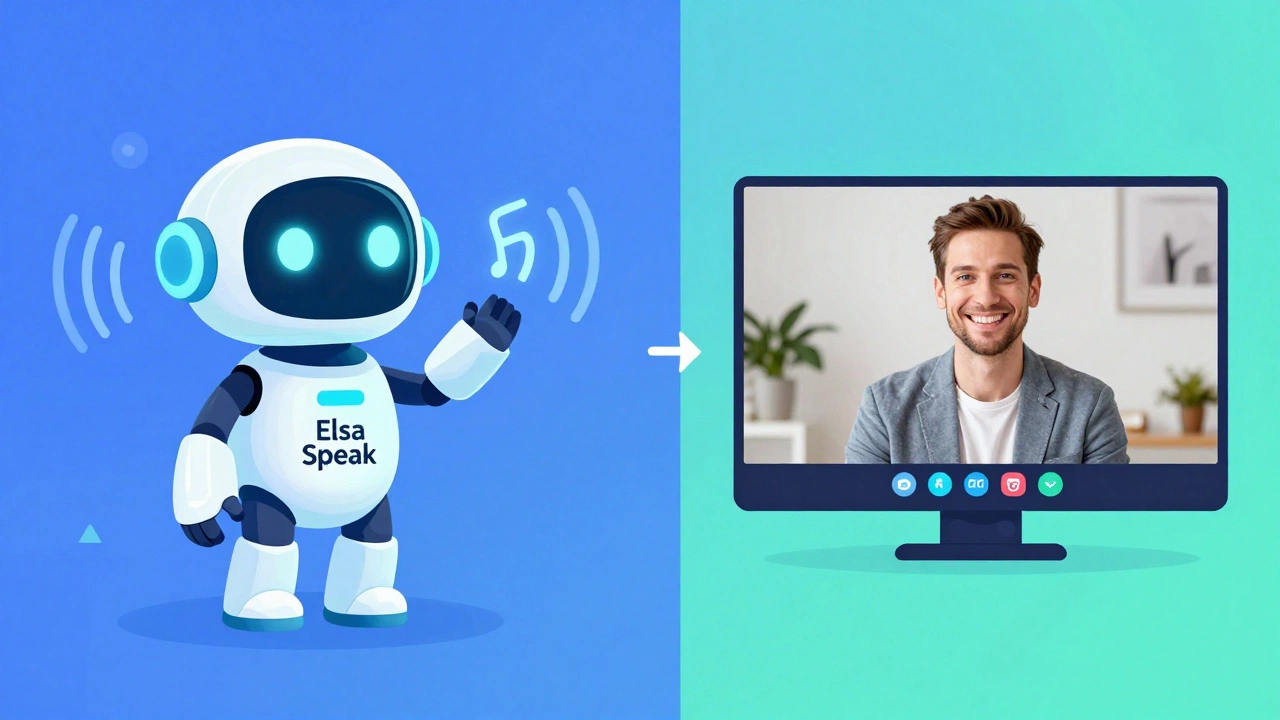
Elsa Speak remains the gold standard here. It doesn't just say "wrong." It breaks down words into sounds. For example, if you struggle with the 'th' sound, it visualizes the difference between your attempt and a native speaker's production. In 2026, their neural networks have improved significantly, offering near-human empathy in feedback tones, which reduces frustration.
Another strong contender is Speechify. While primarily known for text-to-speech, its reading companion mode allows you to read aloud while the app listens and corrects pacing and intonation. This is excellent for professional presentations or public speaking practice.
| App Name | Primary Focus | Feedback Type | Best For |
|---|---|---|---|
| Elsa Speak | Pronunciation & Accent | Phoneme-level scoring | Non-native accents needing clarity |
| Speechify | Reading Fluency | Pacing & Intonation | Professionals & Students |
| Babbel | General Conversation | Basic voice recognition | Beginners starting out |
Human Connection: Tutors and Language Exchange
AI can correct your sounds, but it cannot understand cultural nuance, slang, or the awkward pauses of real conversation. For this, you need humans. There are two models here: paid tutors and free language exchange.
Preply and iTalki connect you with independent tutors. The advantage is structure. You can hire a tutor specifically for business English or casual chat. In 2026, video quality and latency issues have largely been resolved, making these sessions feel like FaceTime calls with a friend who happens to be a teacher. Expect to pay anywhere from $10 to $30 per hour depending on the tutor's credentials.
On the other hand, Tandem and HelloTalk operate on a barter system. You help someone learn your native language, and they help you with English. It’s free, but it requires more effort. You must manage the relationship, ensure equal time spent on both languages, and deal with potential mismatches in commitment levels. It’s great for building confidence because there’s no financial pressure, but progress can be slower and less structured.
Gamified Learning for Habit Building
Let’s be honest: practicing speaking is hard. It feels vulnerable. Gamified apps reduce this friction by making learning feel like play. Duolingo is the giant in this space. While critics argue it focuses too much on translation, its recent updates have added significant speaking exercises. You record sentences, and the app grades them. It’s not perfect, but it gets you talking daily.
The key benefit of Duolingo is retention. The streak mechanic keeps you coming back. For absolute beginners who are terrified of speaking, this low-stakes environment is crucial. Once you’ve built a habit here, you can graduate to more intensive tools like Preply or Elsa.
Choosing Based on Your Specific Goal
Not all English is the same. Your choice of app should align with why you are learning.
- Business Professionals: You need precision and industry-specific vocabulary. Go for Glints (for job-related networking) combined with a specialized tutor on Preply who specializes in Business English. Avoid generic gamified apps.
- Travelers: You need survival phrases and quick comprehension. Busuu offers community corrections where natives review your speaking exercises. This gives you authentic feedback quickly.
- Students/Academics: You need formal tone and complex sentence structures. Use Grammarly for writing support, but pair it with Cambly for spontaneous conversation practice to improve fluency under pressure.
- Casual Learners: If you just want to chat with friends, HelloTalk is sufficient. It integrates messaging, voice notes, and call functions seamlessly.
Pitfalls to Avoid
Many users download five different apps and abandon them all within a month. This is the "collector's fallacy." Having access to tools is not the same as using them. Pick one primary tool for speaking and stick with it for at least three months.
Also, beware of "passive listening" traps. Some apps claim to help you speak by just playing audio. This does not work. You must activate your vocal cords. If the app doesn't ask you to record your voice or talk to a person, it is not a speaking practice app-it’s a listening app.
Finally, don’t ignore the cost. Premium subscriptions add up. Start with free trials. Test the interface. Does the voice recognition work well with your specific accent? If the app constantly mishears you, it will frustrate you into quitting. User experience matters as much as pedagogical theory.
Creating a Sustainable Routine
Technology is only as good as your consistency. Here is a simple framework to integrate these apps into your day:
- Morning (5 mins): Use an AI coach like Elsa Speak to warm up your mouth muscles. Focus on one difficult sound.
- Commute (10 mins): Listen to a podcast or do passive review on Duolingo.
- Evening (15-20 mins): Engage in active output. Have a conversation on Preply or send voice notes on Tandem.
This mix ensures you address pronunciation, vocabulary, and conversational flow without burning out. Remember, fluency is a marathon, not a sprint. The best app is the one you actually open every day.
Is Duolingo good for speaking practice?
Duolingo is decent for beginners to get comfortable hearing themselves speak, but it lacks depth. Its speech recognition is basic and often accepts incorrect pronunciations. It is best used as a supplement to build a daily habit, not as your primary speaking tool.
Which app is best for fixing my accent?
Elsa Speak is widely considered the best for accent reduction. It uses advanced AI to analyze your speech at the phoneme level, providing specific feedback on tongue placement and lip movement that general apps do not offer.
Are free language exchange apps safe?
Apps like Tandem and HelloTalk are generally safe, but you should always exercise caution. Never share personal financial information or meet strangers in person without proper verification. Stick to the app's internal chat and video features initially.
How much does it cost to hire an online tutor?
Prices vary widely. On platforms like Preply or iTalki, community tutors may charge $8-$15 per hour, while professional certified teachers can charge $20-$40+ per hour. Many offer trial lessons for a lower fee.
Can I learn to speak English using only AI apps?
You can achieve a high level of pronunciation and grammatical accuracy with AI, but you may miss out on cultural nuances, slang, and the unpredictability of real human conversation. For complete fluency, combining AI tools with occasional human interaction is recommended.




0 Comments