E-Learning Platform Assessment Tool
How well does your learning platform meet expert criteria?
Answer these 10 questions based on your experience with your current platform. Each correct choice gives 1 point. Score 9-10 = Excellent, 7-8 = Good, 4-6 = Basic, 0-3 = Needs overhaul.
Score: 0/10
When you sign up for an online course, what’s the first thing you notice? Is it the slick design? The instant access to lessons? Or maybe the fact that you can’t find the next video after finishing the last one? A good digital platform doesn’t just host content-it holds your attention, keeps you moving forward, and actually helps you learn. Too many platforms feel like digital libraries with no librarians. You get the books, but no guidance, no feedback, no reason to come back.
It starts with simplicity, not flashy features
A good e-learning platform doesn’t try to do everything at once. It focuses on one thing: helping you learn without distraction. That means clean navigation, clear menus, and zero pop-ups. Think of it like a classroom. You don’t want to be distracted by flashing ads or confusing buttons labeled "Enroll Now" when you’re trying to watch a lecture on calculus.
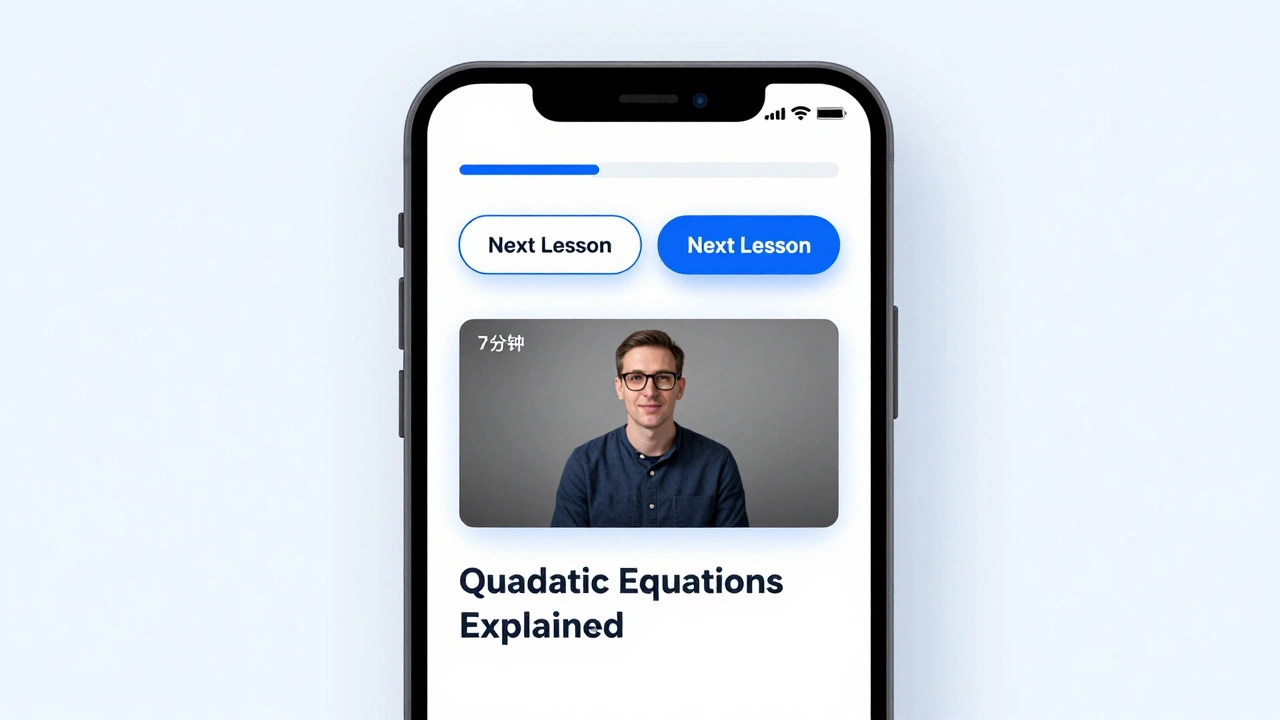
Platforms that work well let you find your course in two clicks or less. No need to log in, then click "My Dashboard," then "Courses," then "Active," then finally "Module 3." That’s not usability-that’s frustration. The best platforms remember where you left off. They show you your progress bar, highlight the next lesson, and even nudge you gently if you haven’t logged in for a few days.
Content must be built for learning, not just uploading
Having video lectures isn’t enough. You can upload a 45-minute recording of someone reading slides to YouTube and call it a course. But that’s not a good digital platform-that’s a storage locker.
Good platforms break content into bite-sized chunks. A 10-minute video on quadratic equations, followed by a quick quiz, then a real-world problem to solve. That’s how the brain learns. Research from Stanford shows learners retain 75% more when content is delivered in 5-12 minute segments with active checkpoints. Platforms that ignore this deliver content like a textbook dump, and learners quit within the first week.
It’s not just length-it’s structure. Good platforms use scaffolding: start simple, build up, reinforce. They don’t throw you into advanced Python coding after three videos on variables. They give you practice exercises that match your level. They adjust based on your answers. If you get a question wrong, they don’t just say "Incorrect." They show you why, link to a short review video, and offer a similar problem to try again.
Interaction isn’t optional-it’s the engine
Learning alone online is hard. Humans are social creatures. A good platform doesn’t pretend you’re not. It builds in ways to connect.
That means discussion threads tied to each lesson. Not a generic forum where no one replies. Real threads where instructors respond within 24 hours, and peers help each other. Platforms like Coursera and Khan Academy have mastered this. You ask, "Why does this formula work?" and someone who took the course last month replies with a simple analogy: "Think of it like water flowing through pipes."
Some platforms even offer live Q&A sessions, peer review for assignments, or group projects. These aren’t add-ons-they’re core to retention. A 2024 study by the University of Melbourne found learners who participated in peer discussions were 40% more likely to complete a course than those who didn’t.

Feedback loops turn passive viewers into active learners
Ever finish a course and feel like you learned nothing? That’s because you got no feedback. A good platform doesn’t just give you a certificate at the end. It gives you insights along the way.
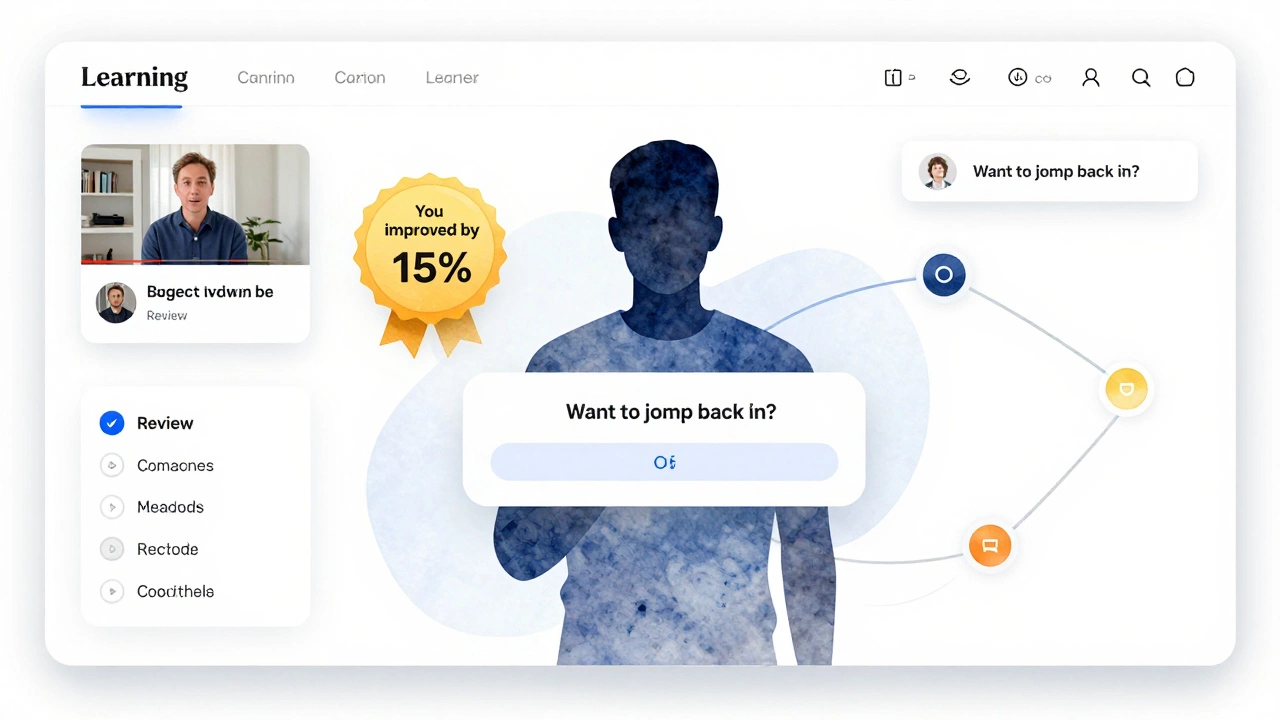
Think about fitness apps. They don’t just say, "You worked out." They say, "You improved your sprint time by 8% this week." Or, "You skipped leg day three times. Here’s a quick routine to catch up."
Good e-learning platforms do the same. They track how long you spend on each topic. They notice if you rewatch the same video five times. They see if you’re acing quizzes but struggling with the final project. Then they adapt. Maybe they suggest a supplemental reading. Or they offer a 10-minute walkthrough from the instructor.
Some even use simple AI to flag at-risk learners. If you haven’t logged in for five days and your quiz scores dropped, the system sends a personalized message: "We noticed you’ve been away. Want to jump back in? Here’s a quick recap and a bonus practice problem."
Accessibility isn’t a checkbox-it’s a requirement
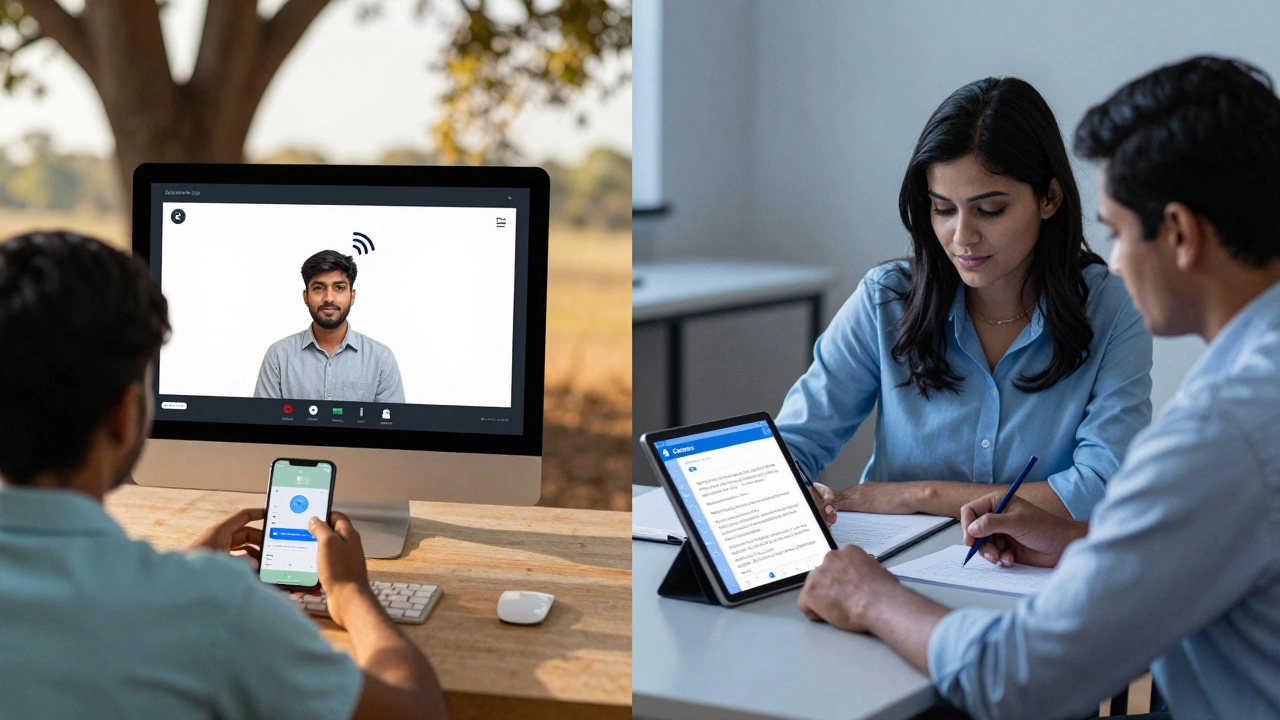
A platform that only works on a high-end laptop isn’t a good platform. It’s exclusionary. Good platforms work on low-end phones, slow internet, and older browsers. They offer downloadable videos, transcripts for audio, and captions for all videos. They follow WCAG 2.1 standards-not because it’s trendy, but because learners in rural India, remote Australia, or low-income households rely on them.
Text-to-speech support? Check. Keyboard navigation? Check. Color contrast for colorblind users? Check. If your platform doesn’t have these, you’re not serving half your potential audience. And in e-learning, that’s not just bad design-it’s unethical.
Mobile isn’t a bonus-it’s the default
Most learners don’t sit at a desk to study. They squeeze in 15 minutes on the bus. They review flashcards while waiting for coffee. They watch a lesson during their lunch break.
A good platform is built for mobile first. Not "mobile-friendly." Not "has an app." But designed so the entire experience-navigation, quizzes, video playback, note-taking-feels natural on a phone. If you have to pinch to zoom, scroll sideways to see a table, or tap five times to submit an answer, you’ve lost them.
The best platforms let you start a lesson on your phone, pick it up on your tablet, and finish on your laptop-all with synced progress. No login hassles. No lost data. Just seamless learning.
It should feel personal, not corporate
Ever get an email from a platform that says, "Dear User, your course is about to expire"? That’s not motivation. That’s a reminder from a robot.
Good platforms use your name. They remember your goals. If you signed up to learn Spanish for travel, they send you phrases you’ll actually use at the airport-not academic grammar rules. If you’re studying accounting to pass your CPA, they highlight exam-style questions and warn you about common mistakes.
They don’t treat you like a number in a dashboard. They treat you like a person with a goal. And that’s what keeps you coming back.
It must evolve with you
Technology changes. So do learners. A good platform doesn’t freeze its content in 2022 and call it a day. It updates. It adds new examples. It removes outdated tools. It listens to feedback.
Look at platforms that have lasted. They don’t just push new courses. They improve old ones. They ask learners: "What confused you?" "What did you wish we covered?" Then they act. That’s how you build trust.
One platform we’ve seen in Sydney updates its programming courses every three months based on what employers are asking for. If Python 3.12 just dropped and companies are hiring for it, they don’t wait six months. They update the course within weeks. That’s commitment.
Final thought: Good platforms don’t sell courses-they build habits
The best digital learning platforms don’t win because they have the most videos. They win because they make learning easy, consistent, and human. They remove friction. They reward effort. They connect you to others. They adapt to your pace.
If your platform feels like a chore, it’s not the learner’s fault. It’s the platform’s.
What’s the biggest mistake e-learning platforms make?
The biggest mistake is treating learners like passive viewers. Platforms that just upload videos and call it a course fail because learning isn’t about consumption-it’s about doing. Without quizzes, feedback, interaction, or personalization, learners lose motivation fast. Studies show course completion rates drop below 10% when there’s no active engagement built in.
Do I need AI to have a good e-learning platform?
No. AI can help with personalization, like suggesting next steps or flagging at-risk learners, but it’s not required. Many successful platforms rely on smart human design: clear structure, timely feedback, and community features. The key isn’t technology-it’s understanding how people learn. A well-designed platform without AI beats a flashy AI platform with poor structure every time.
How do I know if a platform is right for me?
Try the first lesson. If you can’t figure out how to start within 30 seconds, walk away. Look for clear progress tracking, interactive elements like quizzes or discussion prompts, and whether the content feels relevant to your goal. If the platform doesn’t respond to your questions or seems stuck in the past (like using Flash videos or requiring downloads), it’s not built for modern learners.
Are free platforms any good?
Some are. Khan Academy and OpenLearn offer excellent, well-structured content for free. But free often means limited interaction-no instructor feedback, no peer support, no personalized paths. If you’re self-motivated and just need reference material, free works. If you need to actually learn and retain skills, paid platforms with active support usually deliver better results.
What’s the difference between an e-learning platform and a learning management system (LMS)?
An LMS is usually built for institutions-schools, universities, or companies-to manage courses, track enrollment, and issue certificates. Think Moodle or Canvas. An e-learning platform is designed for the learner: Think Udemy or Duolingo. The best platforms blur the line-they’re learner-first but still offer tools for instructors and admins. For individual learners, focus on the experience, not the backend.








0 Comments