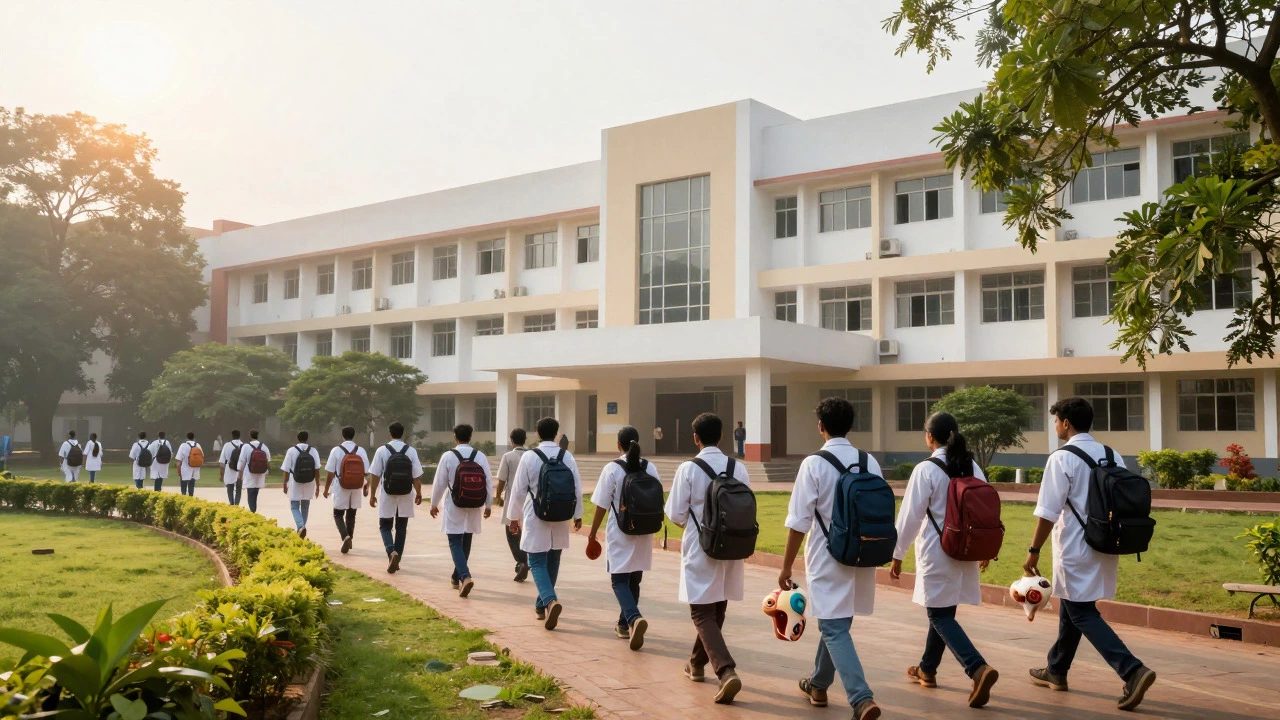
MBBS Cost Estimator (India 2026)
Planning to become a doctor in India? The first thing every parent and student asks is: "How much will this actually cost?" It’s a valid question. Medical education is one of the most significant financial commitments a family can make, and the answer isn't a single number. It varies wildly depending on whether you choose a government or private institution, where the college is located, and even your ranking in the NEET UGNational Eligibility cum Entrance Test for Undergraduate medical admissions.
In this guide, we break down the real costs involved in pursuing an MBBS degreeBachelor of Medicine and Bachelor of Surgery in India for 2026. We’ll look at tuition, hostel fees, coaching costs, and hidden expenses so you can budget accurately without surprises.
The Big Picture: Government vs. Private Colleges
The biggest factor influencing MBBS fees is the type of institution. In India, medical colleges are broadly divided into two categories: government (public) and private (deemed/university). The price gap between them is massive, often differing by a factor of ten or more.
Government Medical Colleges are subsidized by the state or central government. For Indian students, the annual fee typically ranges from ₹50,000 to ₹1,00,000. However, this is not uniform across all states. Some states like Tamil Nadu and Kerala have very low fees for state-quota students, while others might be slightly higher. If you secure a seat through the All India Quota (AIQ), the fee structure follows the norms of the specific government college, which usually remains affordable.
Private Medical Colleges, on the other hand, operate with minimal government subsidy. Here, the annual tuition fee can range from ₹15,00,000 to ₹30,00,000 or even higher in top-tier deemed universities. Over the course of 4.5 years of study plus internship, the total cost can easily cross ₹1 Crore including living expenses. This is why many students opt for government seats if their NEET score allows it.
| Category | Annual Tuition Fee (INR) | Total Course Cost (Approx.) | Key Note |
|---|---|---|---|
| Government (State Quota) | ₹50,000 - ₹1,00,000 | ₹5 Lakhs - ₹10 Lakhs | Lowest cost; requires high NEET rank |
| Government (All India Quota) | Varies by college | ₹8 Lakhs - ₹15 Lakhs | Fees depend on specific institute norms |
| Private (Regular Seat) | ₹15,00,000 - ₹25,00,000 | ₹75 Lakhs - ₹1.25 Crore | High competition; fixed fees |
| Deemed Universities | ₹20,00,000 - ₹35,00,000 | ₹1 Crore - ₹1.75 Crore | Premium infrastructure; highest fees |
Breakdown of Hidden and Additional Costs
Tuition is just the tip of the iceberg. When calculating the true cost of an MBBS degree, you need to account for several other recurring and one-time expenses. Ignoring these can lead to significant budget shortfalls later in the course.
- Hostel and Mess Charges: Most medical colleges require students to stay in hostels, especially during clinical postings. Annual hostel fees range from ₹50,000 to ₹1,50,000 depending on the city and facility quality. In metro areas like Delhi, Mumbai, or Bangalore, expect to pay on the higher end.
- University and Examination Fees: These are mandatory payments made to the university board for semester exams and final assessments. They typically add up to ₹20,000 - ₹50,000 over the entire course.
- Practical Kit and Books: Medical education is practical-heavy. You’ll need anatomical models, stethoscopes, lab coats, and standard textbooks like Harrison’s or Robbins. Budget approximately ₹50,000 - ₹1,00,000 for initial setup and annual book updates.
- Personal Expenses: Travel, mobile recharges, internet, and personal shopping. A realistic estimate is ₹1,00,000 per year**.
So, if you’re looking at a private college with ₹20 Lakh annual tuition, your actual yearly outflow could be closer to ₹25-26 Lakhs. Multiply that by 5 years, and you get a clear picture of the total investment required.

The Role of NEET Coaching in Your Financial Plan
Before you even enter college, there’s a substantial cost associated with preparing for the NEET UG examThe national entrance examination for admission to undergraduate medical programs. Many students underestimate this phase, but it’s critical because a better NEET score directly impacts your future college fees.
Top-tier NEET coaching institutesEducational institutions specializing in preparation for medical entrance exams in cities like Kota, Delhi, and Hyderabad charge anywhere from ₹1,50,000 to ₹3,00,000 for a two-year crash course. This includes lectures, test series, study materials, and sometimes accommodation.
Here’s the strategic logic: Investing ₹2 Lakhs in quality coaching might help you crack a government medical college seat. If you succeed, you save over ₹1 Crore in tuition fees compared to a private college. Therefore, coaching isn’t just an expense; it’s an investment that can drastically reduce your long-term educational debt. However, if you aim for private colleges regardless of rank, the coaching cost becomes a pure additive expense to the already high tuition bills.
NRI and Management Quota Fees: What You Need to Know
Not all students compete under the same quota. There are specific categories with different fee structures that are often misunderstood.
Management Quota Seats: Private colleges reserve a certain percentage of seats (usually 15-50%) as management quota. These seats are filled based on merit but come with significantly higher fees. Often, the fee for a management quota seat is 2x to 5x the regular private seat fee. For example, if the regular fee is ₹20 Lakhs/year, the management quota could be ₹40-100 Lakhs/year. This is why securing a merit-based seat is financially crucial.
NRI Quota Seats: Reserved for Non-Resident Indians and foreign nationals. The fees for these seats are set by the college and are generally the highest in the country. They can range from ₹50 Lakhs to ₹1 Crore+ per year. While open to international students, some Indian citizens with NRI status also apply here, though the financial barrier is extremely high.
Understanding these quotas helps you avoid last-minute shocks. Always ask the college administration for a detailed fee breakdown that distinguishes between tuition, development funds, and security deposits before signing any admission letter.

Financial Aid and Scholarships
If the cost seems prohibitive, don’t panic. Several avenues exist to lower the financial burden.
- Government Scholarships: Schemes like the Pre-Matric and Post-Matric scholarships for SC/ST/OBC/EWS categories can cover a significant portion of tuition and maintenance allowances. Check eligibility based on your family income and caste category.
- College Merit Scholarships: Many private colleges offer fee waivers or discounts for students who score above certain percentiles in NEET (e.g., 95+ percentile). This can reduce annual fees by ₹5-10 Lakhs.
- Education Loans: Banks in India offer dedicated education loans for medical courses with collateral-free limits up to ₹20 Lakhs and collateral-backed limits up to ₹75 Lakhs or more. Interest rates start around 9-10% per annum, with a moratorium period during the course duration.
Always compare loan offers from multiple banks. Look for those that offer interest subvention or reduced processing fees specifically for medical education.
Strategic Tips for Managing MBBS Costs
Managing the finances of a 5-year medical degree requires planning. Here are some practical tips to keep your budget on track:
- Compare State-wise Fees: Don’t just look at famous colleges. Some smaller state government colleges in less urbanized areas offer excellent education at a fraction of the cost of metropolitan private institutions.
- Budget for Internship Year: The final year (internship) often has separate fees or reduced tuition. Clarify this in advance.
- Avoid Premium Add-ons: Private colleges often bundle 'development funds' or 'infrastructure charges' that are non-refundable. Negotiate or verify if these are truly necessary.
- Plan for PG Preparation: After MBBS, most doctors pursue MD/MS. Start saving or planning for this next phase early, as it adds another 3-4 years of potential costs.
By understanding the full spectrum of costs-from NEET coaching to final internship fees-you can make an informed decision that aligns with your academic goals and financial reality.
What is the average total cost of MBBS in a private college in India?
The average total cost for a private MBBS course in India ranges from ₹75 Lakhs to ₹1.5 Crores for the entire 5.5-year duration. This includes tuition, hostel, mess, and miscellaneous expenses. Top-tier deemed universities may exceed this range significantly.
Are government medical college fees the same for all states?
No, fees vary by state. Each state government sets its own fee structure for state-quota students. For example, fees in Kerala might be lower than in Punjab or Haryana. All India Quota seats follow the specific college's norms, which can differ from state quota fees.
How much does NEET coaching cost in 2026?
Quality NEET coaching in major hubs like Kota or Delhi typically costs between ₹1.5 Lakhs and ₹3 Lakhs for a comprehensive two-year program. Online options are cheaper, ranging from ₹50,000 to ₹1,00,000, but lack the structured environment of physical institutes.
Is it worth paying high fees for a private medical college?
It depends on your career goals. If you plan to practice in India, a government degree is equally valid. However, if you aim for global opportunities or prefer premium infrastructure and networking, a top private college might offer better exposure. But financially, government seats are always the safer bet for ROI.
Do I need to pay extra for the internship year?
In government colleges, the internship year often has nominal or no tuition fees, but hostel charges continue. In private colleges, the internship year usually carries a separate fee, which can be 50-100% of the annual tuition. Always check the college's fee policy for the final year specifically.








0 Comments