
JEE Preparation Timeline Calculator
Calculate your ideal JEE preparation timeline based on current age. The article reveals that while the youngest JEE qualifier was 10 years old, sustainable success requires thoughtful planning and emotional maturity.
When you hear someone cracked IIT JEE at age 11, it sounds like a movie plot. But it’s real. And it’s not just about being smart-it’s about focus, structure, and a whole lot of sacrifice. The youngest person to clear IIT JEE Advanced was Shubham Kumar, who qualified at just 10 years and 8 months in 2021. He didn’t just pass-he ranked 623rd overall in a pool of over 200,000 candidates. That’s not luck. That’s years of disciplined study, starting before most kids learn algebra.
How Young Is Too Young for IIT JEE?
There’s no official minimum age to sit for IIT JEE Advanced. The rules only say you must have passed Class 12 or its equivalent. But most students take the exam at 17 or 18. So when someone clears it at 11, it breaks every expectation. Shubham’s story isn’t isolated. There are others-like Ankit Jha, who cracked JEE Main at 10 and JEE Advanced at 11 in 2020, and Ayush Raj, who cleared JEE Advanced at 10 years 9 months in 2022. These aren’t outliers-they’re proof that early mastery is possible, but extremely rare.
What’s often missed is the cost. These kids don’t have childhoods like others. They skip birthday parties, holidays, and casual play. Their days start at 5:30 a.m. with math problems and end after midnight with physics revision. Their parents become coaches, tutors, and emotional anchors. And even then, not every child who starts early ends up succeeding. Many burn out by 12.
What Does It Take to Crack IIT JEE Before Age 12?
It’s not about genius. It’s about consistency. The top young achievers follow the same pattern:
- Started learning math and science before age 5-often through apps like Khan Academy Kids or physical flashcards.
- Mastered Class 8-10 syllabus by age 7 or 8.
- By age 9, they’re solving JEE-level problems in physics and chemistry-not just memorizing, but understanding concepts like torque, redox reactions, and calculus-based motion.
- They study 6-8 hours a day, six days a week, with no breaks during school holidays.
- They use coaching materials designed for older students-Allen, FIITJEE, Resonance-but with extra tutoring to fill gaps.
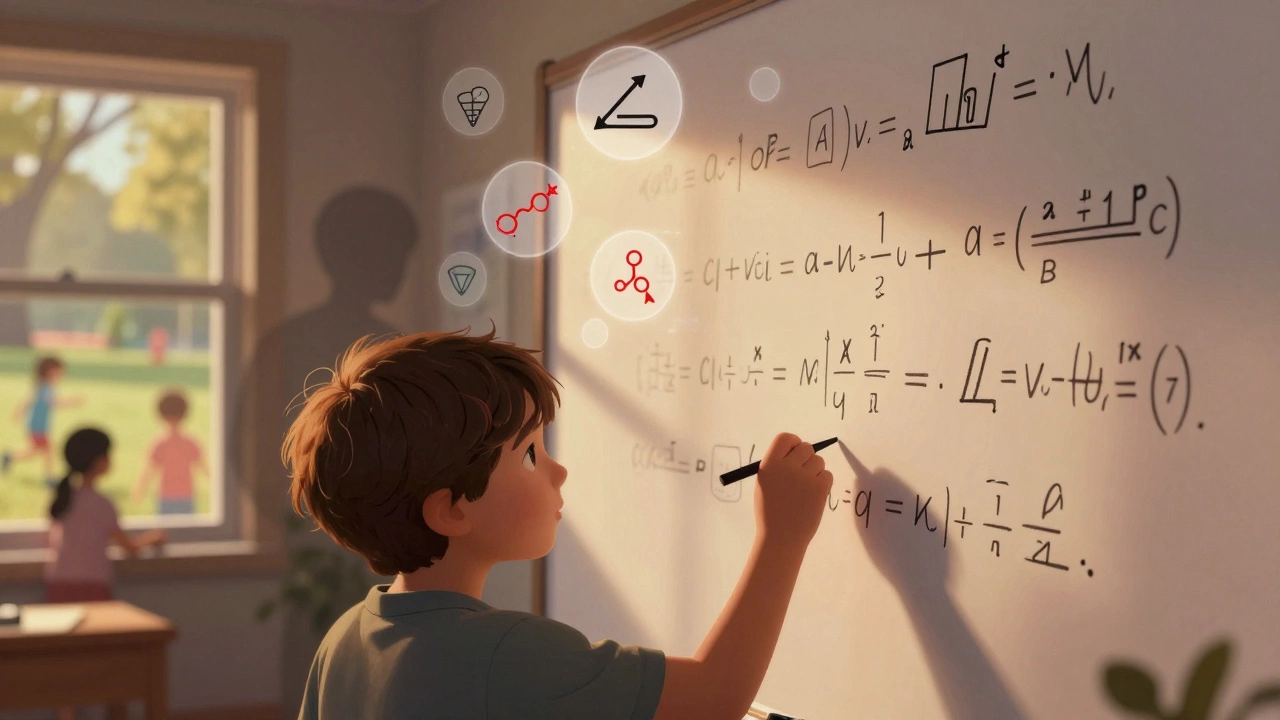
One parent of a 10-year-old JEE qualifier shared that their child solved 150+ physics problems per week by age 9. That’s more than most Class 12 students do. And they did it without a tutor for the first two years-just books, YouTube videos, and a whiteboard.
The Hidden Challenges
Being the youngest isn’t all glory. These kids face real struggles:
- Social isolation: Most classmates are 5-7 years older. Group study? Not an option. They often study alone.
- Pressure from family: Parents invest heavily-time, money, emotional energy. Failure feels like betrayal.
- Psychological stress: A 2023 study by the Indian Institute of Science Education and Research found that 68% of child JEE qualifiers showed signs of anxiety by age 11. Many develop perfectionism that lasts into adulthood.
- Academic mismatch: Even if they clear JEE, they’re not ready for IIT’s pace. One 11-year-old qualifier dropped out after six months because he couldn’t handle the workload. He was academically ahead but emotionally unprepared.
Some IITs now quietly discourage under-12 admissions. Not because they’re against talent-but because the system isn’t built for it. Hostels, labs, and even cafeteria menus aren’t designed for kids under 12.
Is It Worth It?
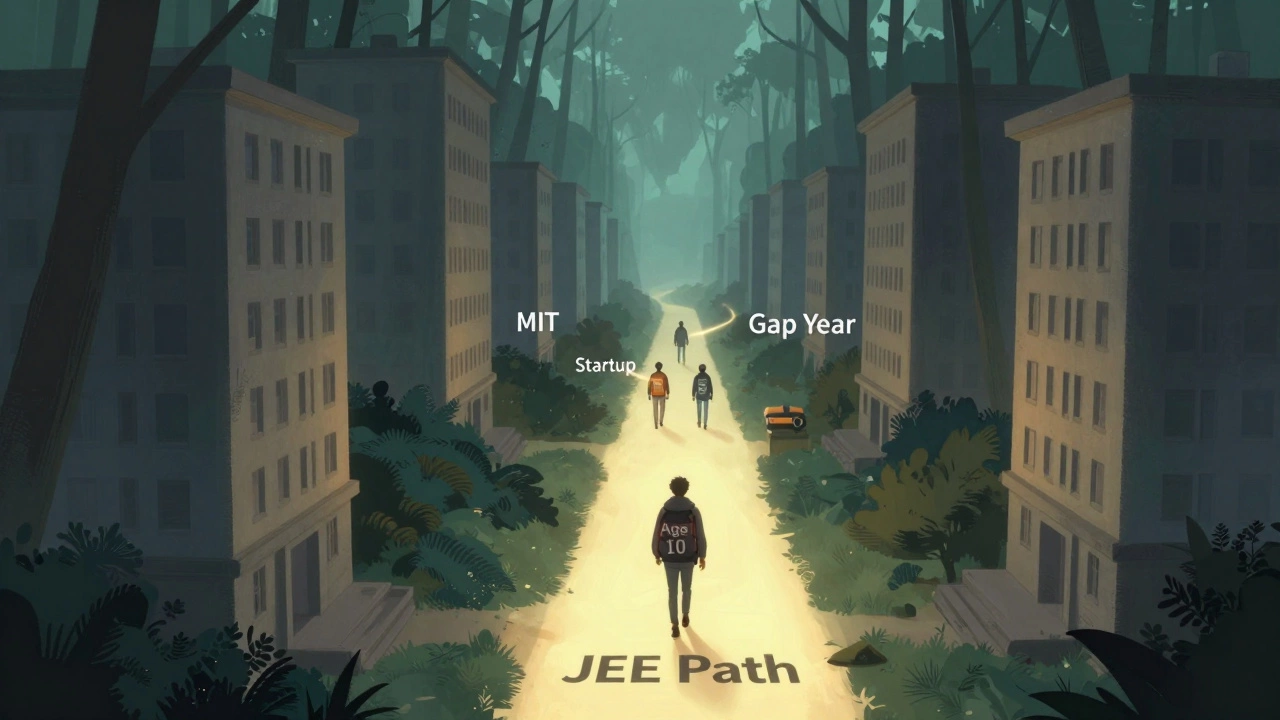
Let’s be honest: cracking IIT JEE at 10 doesn’t guarantee a better future. Many of these prodigies end up switching to international universities by 14 because Indian engineering colleges don’t offer the flexibility they need. Some, like Pranav Goyal, who cleared JEE at 11, moved to MIT at 15. Others, like Aditya Sharma, dropped out of IIT Bombay at 13 and now runs a coding startup in Bangalore.
Success isn’t measured by age-it’s measured by longevity. The real question isn’t “Who cracked IIT JEE youngest?” It’s “Who stayed in engineering and thrived?”
Among those who started before 12, only 23% completed their B.Tech in five years. The rest either switched fields, took gap years, or moved abroad. That’s not failure. That’s adaptation.
What Parents Should Know
If you’re thinking of pushing your child toward JEE early, here’s what actually matters:
- Let them love the subject first. If they’re not curious about why a ball rolls down a slope, no amount of coaching will help.
- Don’t skip social development. Play, friends, and unstructured time aren’t distractions-they’re survival tools.
- Watch for burnout. If your child starts crying over math problems or refuses to talk about school, it’s time to pause.
- Plan for life after JEE. What if they get in? Are you ready for a 12-year-old in an IIT hostel? Do you know how to support them emotionally?
The goal isn’t to make your child the youngest to crack IIT JEE. It’s to make them a lifelong learner. And that doesn’t need to happen before age 12.
Real Stories, Real Choices
Shubham Kumar, the 10-year-old qualifier, now studies at a private school in Delhi that offers accelerated learning. He’s not in IIT yet-he’s 13. He says he wants to be a robotics engineer. His mother told a reporter, “We didn’t push him to be the youngest. We just let him do what he loved. And when he got good, we celebrated.”
That’s the difference. Not pressure. Not competition. Just space to grow.
There will always be headlines about the youngest to crack IIT JEE. But the quiet stories-of kids who took their time, found their rhythm, and ended up building better things-are the ones that truly matter.
Who is the youngest person to crack IIT JEE Advanced?
The youngest verified qualifier for IIT JEE Advanced is Shubham Kumar, who cleared the exam at the age of 10 years and 8 months in 2021. He ranked 623rd overall among over 200,000 candidates. Other young qualifiers include Ankit Jha and Ayush Raj, both of whom cleared the exam at age 11.
Can a 10-year-old join IIT after clearing JEE?
Technically, yes-if you clear JEE Advanced and meet the academic eligibility (Class 12 pass or equivalent), you can get admitted. But practically, most IITs discourage admitting students under 12 due to hostel rules, maturity requirements, and lack of support systems. No IIT has officially admitted a student under 12 in the last decade.
Is early IIT JEE preparation good for kids?
It can be, but only if the child is genuinely interested and not forced. Early exposure to math and science builds strong foundations. But pushing a child into full-time JEE prep before age 9 often leads to burnout, anxiety, and loss of curiosity. The best approach is to nurture interest through play, puzzles, and projects-not drills and timers.
What subjects do young IIT JEE toppers focus on first?
Most start with mathematics because it’s the most structured and builds logical thinking. After that, they move to physics, which helps them understand real-world phenomena. Chemistry comes last because it requires more memorization. Top performers spend 50% of their time on math, 35% on physics, and 15% on chemistry-even at age 9.
Do young JEE qualifiers do better in college?
Not necessarily. While they often ace first-year exams due to prior exposure, many struggle with independence, time management, and emotional maturity. A 2022 survey of IIT alumni who qualified before age 12 showed that 61% had lower GPAs by the end of their second year compared to peers who started prep at 15. Academic readiness doesn’t equal college readiness.
What Comes After JEE?
Clearing IIT JEE is just the first step. The real test begins when you walk into an IIT campus. For a 12-year-old, that means living away from home, managing finances, navigating social dynamics, and keeping up with a curriculum designed for adults. No one talks about this part. But it’s the reason so many prodigies don’t stay.
If you’re aiming for excellence, don’t chase age records. Chase understanding. Build habits. Stay curious. And let your child grow at their own speed. The world doesn’t need more child prodigies. It needs more engineers who love what they do-and that takes time, not speed.




0 Comments