
Government Job Matchmaker
Not sure which exam to target? Answer these quick questions to find the path with the best return on investment for your specific profile.
Everyone wants a government job. The stability, the pension, the respect-it’s a package deal that keeps millions of aspirants glued to their study desks for years. But here’s the uncomfortable truth: there is no single "easy" government job. If someone tells you they cracked a top-tier post without breaking a sweat, they’re either lying or they had an unfair advantage. However, some paths are definitely less brutal than others. You just need to know where to look and how to play the numbers game.
Before we start hunting for shortcuts, let’s define what "easy" actually means in this context. Are you looking for the exam with the least competition? The one with the simplest syllabus? Or perhaps the role with the lowest qualification barrier? Most candidates confuse these three. An exam might have a simple syllabus but attract 500 applicants per seat. Another might have a tough syllabus but only 10 applicants because it requires a niche engineering degree. Understanding this distinction is your first step toward sanity.
The Myth of the "Easy" Exam
Let’s bust a common myth right away. There is no government job that is universally easy. The difficulty depends entirely on your background, your preparation time, and your tolerance for risk. For a commerce graduate, an accounting-based role might feel natural. For an engineer, a technical post is a breeze. But if you try to force a square peg into a round hole, even the "easiest" exam becomes a nightmare.
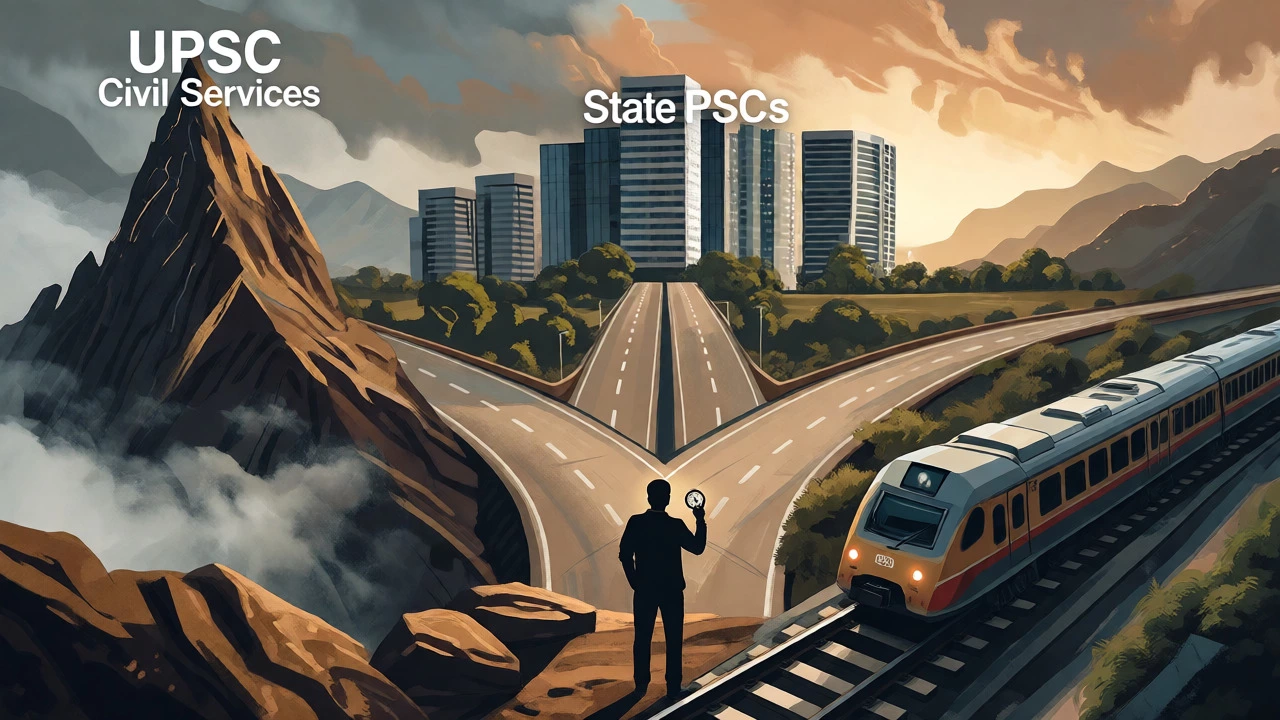
Think about it like this: Would you rather fight one lion or ten wolves? Some exams are lions-few seats, high prestige, massive effort required (like the UPSC Civil Services). Others are wolves-many seats, lower prestige, moderate effort, but still dangerous if you aren’t prepared. Your goal isn’t to find a path with zero obstacles; it’s to find a path where the obstacles match your strengths.
State Public Service Commissions (PSCs): The Hidden Gem
If you want the highest return on investment for your effort, look at State Public Service Commissions or State PSCs. These bodies conduct recruitment drives for administrative roles within individual states, such as Deputy Collector, Sub-Divisional Magistrate, or State Police Officer. Why are they often considered easier than national-level exams?
- Limited Competition: Unlike the UPSC, which attracts lakhs of applicants from across the country, State PSCs usually restrict eligibility to residents of that specific state. This drastically cuts down the candidate pool.
- Fewer Seats, But Fewer Rivals: While the number of vacancies might be smaller, the ratio of applicants to seats is often more favorable.
- Regional Language Advantage: Many State PSC exams include questions on local history, geography, and current affairs. If you grew up in the state, this knowledge is free real estate. You don’t need to memorize obscure facts; you already live them.
For example, cracking the Kerala PSC or Maharashtra PSC can get you a Group B officer position. The salary is decent, the perks are solid, and you stay close to home. Compare this to fighting for a spot in the IAS, where you’re competing against the entire nation’s brightest minds.

Staff Selection Commission (SSC) CGL: The Volume Game
Next on the list is the SSC CGL (Combined Graduate Level) exam. This is arguably the most popular route for graduates seeking central government jobs. Is it "easy"? Not exactly. It’s highly competitive. But it offers something unique: volume.
Every year, the SSC releases thousands of vacancies for posts like Income Tax Inspector, Excise Inspector, and Assistant Section Officer. Because the number of seats is high, your margin for error is slightly larger. In exams with only 50 seats, one bad day ruins your chances. With 3,000 seats, you can afford to have a mediocre performance in one section if you crush it in another.
However, beware of the trap. The sheer volume of vacancies attracts everyone who has ever passed college. You’ll be competing against people who have been preparing for five years straight. To win here, you don’t need to be a genius; you need to be consistent. Speed and accuracy in Quantitative Aptitude and Reasoning are non-negotiable. If you can solve math problems quickly, you’re halfway there.
| Exam Body | Competition Level | Syllabus Breadth | Best For |
|---|---|---|---|
| UPSC Civil Services | Extremely High | Vast (General Studies) | All-rounders with deep analytical skills |
| State PSCs | Moderate-High | State-specific + General | Residents with strong local knowledge |
| SSC CGL | High | Math, English, GK, Reasoning | Graduates good at speed and logic |
| Railway NTPC/Group D | Very High | Basic Math, Science, GK | Non-graduates or those seeking quick entry |
| Banking (IBPS/SBI) | High | Quant, Reasoning, English, Current Affairs | Those interested in finance/private sector backup |
Railway Recruitment Board (RRB): The Entry-Level Shortcut
If you don’t have a degree or want a job immediately after school, the Railway Recruitment Board (RRB) exams are your best bet. Posts like Group D, NTPC (Non-Technical Popular Categories), and ALP (Assistant Loco Pilot) offer massive recruitment drives.
Why is this considered easier? The barrier to entry is low. Many positions require only a 10th or 12th pass certificate. The syllabus is basic: arithmetic, general awareness, and reasoning. You won’t be writing essays or analyzing complex policy issues. You’ll be solving straightforward multiple-choice questions.
But here’s the catch: the competition is fierce because everyone applies. When a notification comes out for 30,000 Group D posts, you might see 10 million applications. So, while the exam is easy, getting selected is hard. You need to score near-perfect marks. Treat the RRB exams as a sprint, not a marathon. Focus on speed drills and mock tests. If you can finish the paper with 10 minutes to spare and 90% accuracy, you’re in the race.
Public Sector Undertakings (PSUs): The Specialist’s Path
Many students overlook Public Sector Undertakings (PSUs) like ONGC, IOCL, BHEL, and GAIL. These companies hire engineers, accountants, and managers through exams like GATE (Graduate Aptitude Test in Engineering) or independent recruitment drives.
This is often the easiest path for specialists. If you are a mechanical engineer, applying for a PSU role means you’re only competing against other mechanical engineers. You’re not fighting historians or literature graduates. Your technical knowledge is your shield. Since fewer people apply for niche roles compared to generalist exams, the selection ratio is often better.
Plus, PSUs offer salaries that often beat initial government pay scales. They also provide excellent housing and medical benefits. If you have a strong academic record in your field, leverage it. Don’t dilute your expertise by trying to master general studies unless necessary.
How to Choose Your Target
So, which one should you pick? Here’s a quick decision tree:
- Do you have a specialized degree? Go for PSUs or technical government roles (Engineering/Agriculture).
- Are you a resident of a state with active recruitment? Check your State PSC notifications. The competition is localized and manageable.
- Are you good at math and fast thinking? Aim for SSC CGL or Banking exams. These test aptitude, not rote memory.
- Do you have no degree or limited resources? Try Railway Group D or NTPC. The syllabus is light, but you must practice speed relentlessly.
Remember, consistency beats intensity. Studying two hours every day for six months is better than studying twelve hours a day for a week and burning out. Track your progress weekly. Take mock tests seriously-they reveal your weaknesses faster than any textbook.
Finally, keep an eye on official notifications. Vacancies fluctuate wildly. One year, the Railways might hire 100,000 people; the next, only 5,000. Being ready when the window opens is half the battle. Set alerts for employment news and check official websites regularly. Don’t wait for friends to tell you; be proactive.
Is the UPSC exam really the hardest government job?
Yes, generally speaking. The Union Public Service Commission (UPSC) Civil Services Examination is considered the toughest due to its vast syllabus, unpredictable question patterns, and extremely low success rate (often less than 0.1%). It requires deep analytical skills and extensive general knowledge, making it harder than specialized exams like SSC or Banking.
Can I prepare for both State PSC and UPSC simultaneously?
Absolutely, and many candidates do. The core subjects like History, Geography, Polity, and Economy overlap significantly. Preparing for UPSC covers about 70-80% of the State PSC syllabus. However, you will need to dedicate extra time to state-specific topics (local history, culture, and current affairs) closer to the State PSC exam date.
Which government job has the highest salary?
While base pay varies, senior positions in the Indian Administrative Service (IAS), Indian Foreign Service (IFS), and Indian Police Service (IPS) offer the highest overall compensation packages, including housing allowances, travel perks, and retirement benefits. Among technical roles, scientists in ISRO or DRDO also command very high salaries.
Is banking a better option than SSC CGL?
It depends on your career goals. Banking exams (like IBPS PO) are more frequent and offer faster entry into the workforce. Salaries are comparable initially, but private sector opportunities are abundant for bankers. SSC CGL offers more diverse departmental options (Tax, Customs, External Affairs) and potentially higher long-term growth in administration, but the recruitment cycle is slower.
Do I need a degree to get a government job?
No. While many prestigious roles require a bachelor’s degree, there are plenty of government jobs available for 10th and 12th pass candidates. Examples include Railway Group D, Postal Assistants, Police Constables, and various clerical posts in state governments. Always check the specific eligibility criteria for each notification.





0 Comments