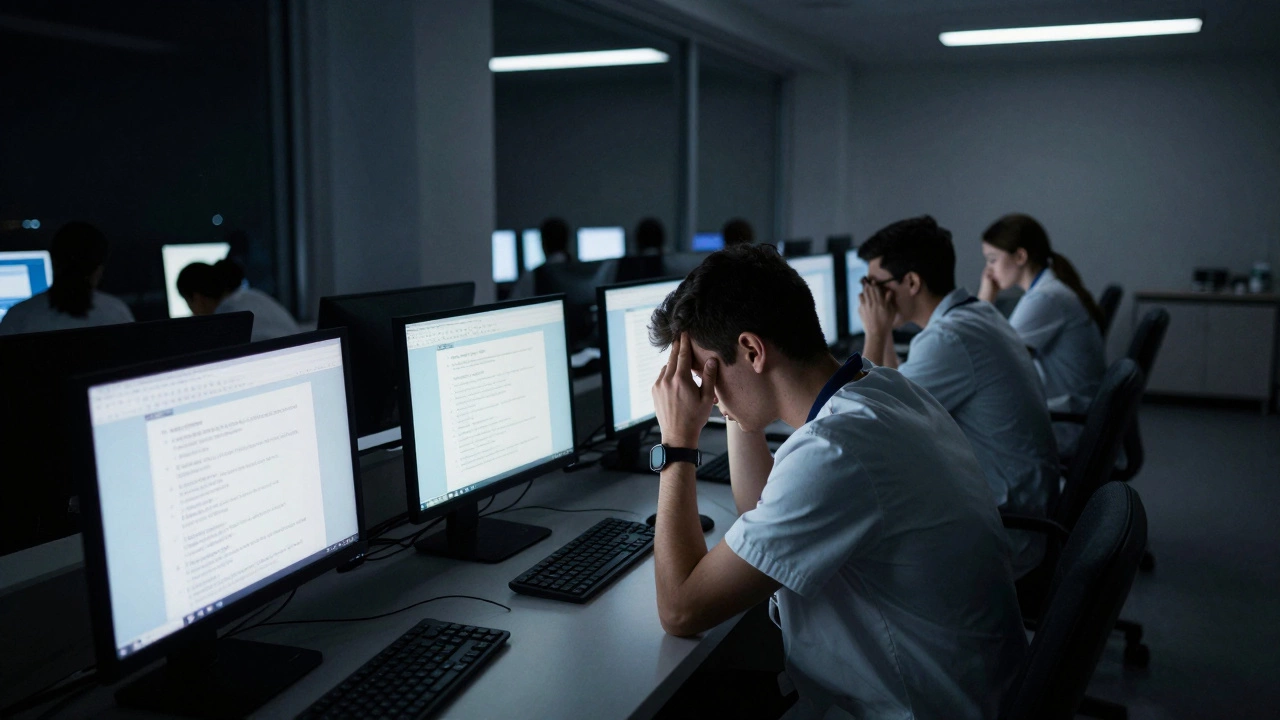
The USMLE isn't just hard-it's designed to break people. Every year, over 40,000 doctors-in-training take the United States Medical Licensing Examination. About 5% of them fail Step 2 CK on their first try. That’s not a small number. It’s more than the entire population of some small U.S. towns. And those who fail don’t just get a red mark on a scorecard-they lose months of preparation, thousands of dollars, and sometimes, their chance to practice medicine in the U.S. at all.
Why the USMLE Stands Out
The USMLE isn’t a single test. It’s three high-stakes exams rolled into one brutal marathon: Step 1, Step 2 CK, and Step 3. Each one tests something different. Step 1 used to be the ultimate gatekeeper-memorizing thousands of facts about pathology, pharmacology, microbiology, and physiology. In 2022, it switched to pass/fail, but that didn’t make it easier. It just made the competition fiercer. Now, medical schools judge applicants by how they perform on Step 2 CK, which is even more clinical, more complex, and more unpredictable.
Step 2 CK asks questions like: A 68-year-old man presents with fatigue, weight loss, and a 4 cm mass in the right upper quadrant. Lab results show elevated alkaline phosphatase and bilirubin. What’s the next best step? You don’t just need to know the answer. You need to know why every other option is wrong-and fast. You have 9 hours to answer 318 questions. No breaks beyond the allotted 45 minutes. You’re sitting in a windowless room with strangers, surrounded by the quiet hum of computers and the occasional sigh of someone who just realized they missed a key clue.
How It Compares to Other Tough Exams
Some people argue the bar exam is tougher. Maybe. But the bar exam is about applying law to hypotheticals. You can study patterns. You can memorize outlines. You can take practice tests until your fingers cramp. The USMLE doesn’t work that way. It doesn’t care if you’ve seen a question before. It throws you a case you’ve never encountered, with subtle clues buried in a 200-word vignette. One wrong assumption-misreading a lab value, missing a drug interaction-and you’re down the wrong path.
The CPA exam? Four sections. 16 hours total. It’s long. It’s dense. But it’s structured. You know what’s on the test. The USMLE doesn’t give you a blueprint. The examiners change the weighting every year. One year, infectious diseases are heavy. The next, it’s behavioral science. You can’t predict it. You have to know everything.
And then there’s Step 3-the final hurdle. It’s not just knowledge. It’s clinical judgment under pressure. You’re managing virtual patients. You have to decide when to order a CT scan, when to admit, when to discharge. One misstep, and you fail the case. You don’t get a second chance within the same exam window.
The Human Cost
Doctors don’t talk much about failing the USMLE. There’s shame in it. A friend of mine, a brilliant graduate from a top Indian medical school, spent 18 months studying after her first Step 2 CK failure. She worked two part-time jobs to pay for retakes. She lost sleep. She stopped calling her family. She cried in the bathroom before every practice test. When she finally passed, she didn’t celebrate. She just sat in her car for an hour, staring at the dashboard.
That’s not rare. Studies from the National Board of Medical Examiners show that international medical graduates-like those from India, Pakistan, and the Philippines-are more likely to fail. Why? Because their training doesn’t always match the U.S. system. They’re tested on American clinical norms, American terminology, American protocols. Even if they’re excellent clinicians, they’re judged by a system that doesn’t always account for their background.
What Makes It Truly Unfair?
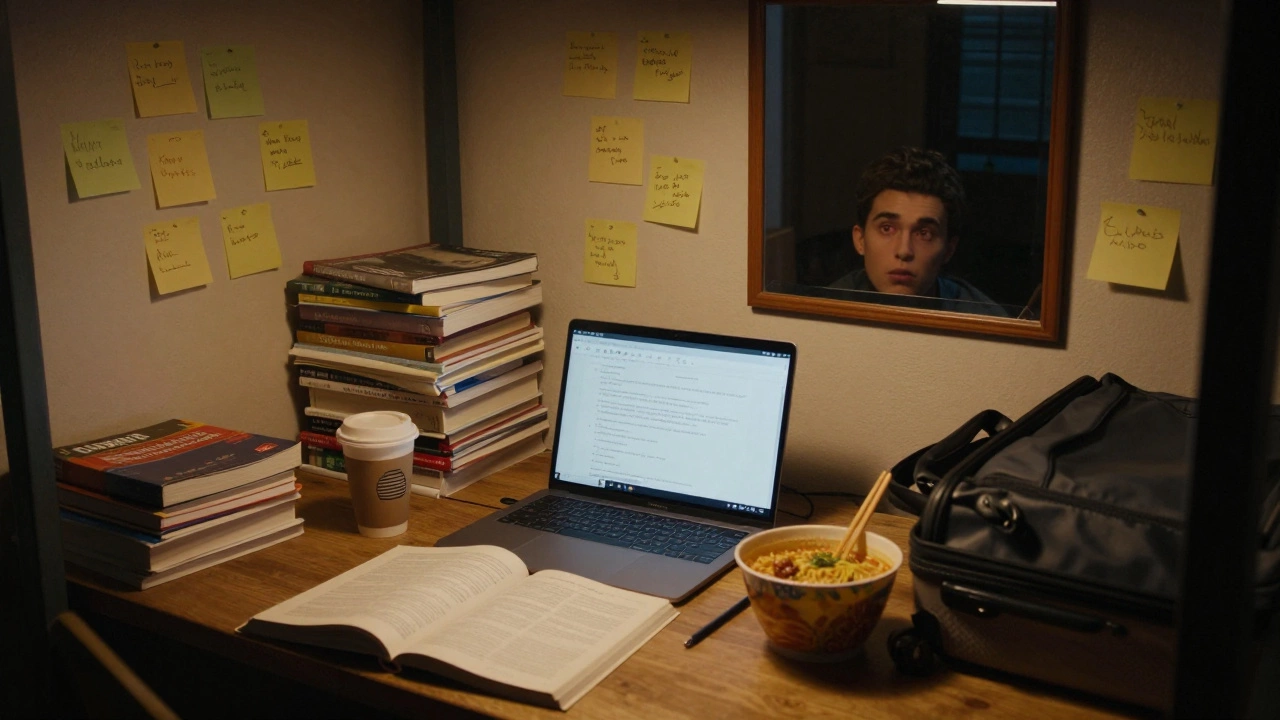
The USMLE isn’t just hard. It’s expensive. Each step costs over $1,000. The review materials? Another $2,000 to $5,000. Many students take out loans just to sit for the exams. Some work 60-hour weeks in hospitals while studying. Others move across the country, living in cramped apartments, eating ramen, chasing one more practice question.
And yet, the pass rates don’t reflect ability. They reflect access. Students with private tutors, expensive question banks, and study groups pass at twice the rate of those who don’t. It’s not a meritocracy. It’s a privilege filter.
Is There a Way Through?
Yes. But it’s not easy.
- Start early. Don’t wait until your final year. Begin reviewing anatomy and physiology during your third year of med school.
- Use UWorld religiously. It’s not perfect, but it’s the closest thing to the real exam. Do every question. Review every explanation-even the ones you get right.
- Focus on weak areas, not strengths. If you’re strong in cardiology but weak in neurology, spend 70% of your time on neurology.
- Take timed blocks. Simulate the real test environment. No phone. No distractions. Just you and the clock.
- Join a study group. Talking through cases helps you spot blind spots. You’ll catch mistakes others make-and avoid them yourself.
There’s no magic trick. No shortcut. Just relentless, disciplined preparation. And even then, luck plays a role. The questions you get on test day? They’re randomly selected. You could get lucky. Or you could get a set that targets every gap in your knowledge.

What Happens If You Fail?
You can retake Step 1 and Step 2 CK up to six times total. Step 3? Only four times. But each failure adds six months to your timeline. You lose momentum. You lose confidence. And every time you sit down to study again, the fear creeps back in.
Some students switch careers. Others move to countries where their degrees are accepted without USMLE. A few push through, year after year, until they pass. There’s no right answer. Only the one you live with.
Is It Worth It?
For some, yes. The U.S. offers higher pay, better research opportunities, and more advanced medical technology. But it’s not just about money. It’s about validation. Passing the USMLE means you’ve survived one of the most grueling tests in the world. It means you can stand in an American hospital, in a white coat, and say: I belong here.
But if you’re doing it just for the prestige? You’ll burn out. If you’re doing it because you think it’s the only path to success? You might be wrong. Many great doctors never took the USMLE. They practice in Canada, the UK, Australia, or back home. They save lives. They teach. They innovate.
The USMLE isn’t the measure of a good doctor. It’s just the gate.
Is the USMLE harder than the bar exam?
The USMLE is generally considered harder because it tests a broader range of medical knowledge under time pressure, with less predictable question patterns. The bar exam is more about applying legal principles to hypotheticals, which can be learned through pattern recognition. The USMLE requires deep, flexible understanding across dozens of specialties, with no clear syllabus to memorize.
What’s the pass rate for the USMLE Step 1?
Since Step 1 switched to pass/fail in 2022, the pass rate for U.S. medical school graduates is around 95%. For international medical graduates, it’s closer to 70%. But those numbers hide the real challenge: the exam has become more competitive, not easier. With no numerical score, residency programs now rely heavily on Step 2 CK scores, making that exam even more critical.
Can you pass the USMLE without expensive prep courses?
Yes, but it’s rare. Many successful test-takers use free or low-cost resources like the USMLE-Rx question bank, First Aid for the USMLE, and YouTube lectures from Pathoma or Boards and Beyond. However, access to UWorld-often priced at $2,000+-is a major advantage. Those who can’t afford it often rely on shared accounts or library access, which limits their practice time. Success without expensive prep requires extreme discipline and access to reliable study materials.
How long should you study for the USMLE Step 2 CK?
Most students spend 4 to 8 weeks studying full-time, dedicating 8-10 hours a day. That’s roughly 2,000 to 3,000 hours of focused prep. For those working while studying, it can take 6 to 12 months. The key isn’t just time-it’s active recall and repeated exposure to high-yield questions. Many who fail didn’t study enough-they studied incorrectly.
Is the USMLE the hardest exam in the world?
It’s among the toughest. Other exams like India’s NEET PG, China’s National Medical Licensing Examination, or Japan’s Medical Practitioners’ Examination are also extremely difficult. But the USMLE stands out because of its global reach, high stakes, and the fact that it’s the only exam that can block a doctor from practicing in the world’s largest healthcare system. It’s not just hard-it’s consequential.
Final Thought
The toughest exam isn’t the one with the most questions or the longest duration. It’s the one that makes you question your entire identity. The USMLE doesn’t just test knowledge. It tests resilience. It tests whether you can keep going when every part of you wants to quit. And for those who do? They don’t just become doctors. They become survivors.








0 Comments