Teacher Training Pathway Finder
Answer these questions to discover which teacher training pathway best fits your situation.
💡 Pro Tip:
You want to become a teacher. You know you need specific training. But when you search for programs, the names change depending on where you look. One site says "College of Education." Another mentions "Normal School." A third talks about "Pedagogy Institutes." It is confusing. You might wonder if these are different things or just different labels for the same path.
The short answer is that a teacher training school goes by many names. In the United States, it is often called a College of Education. In Europe, you will see "Faculty of Education." Historically, they were known as "Normal Schools." Understanding these terms helps you find the right program for your career goals. It also helps you understand the history and structure of how teachers are prepared worldwide.
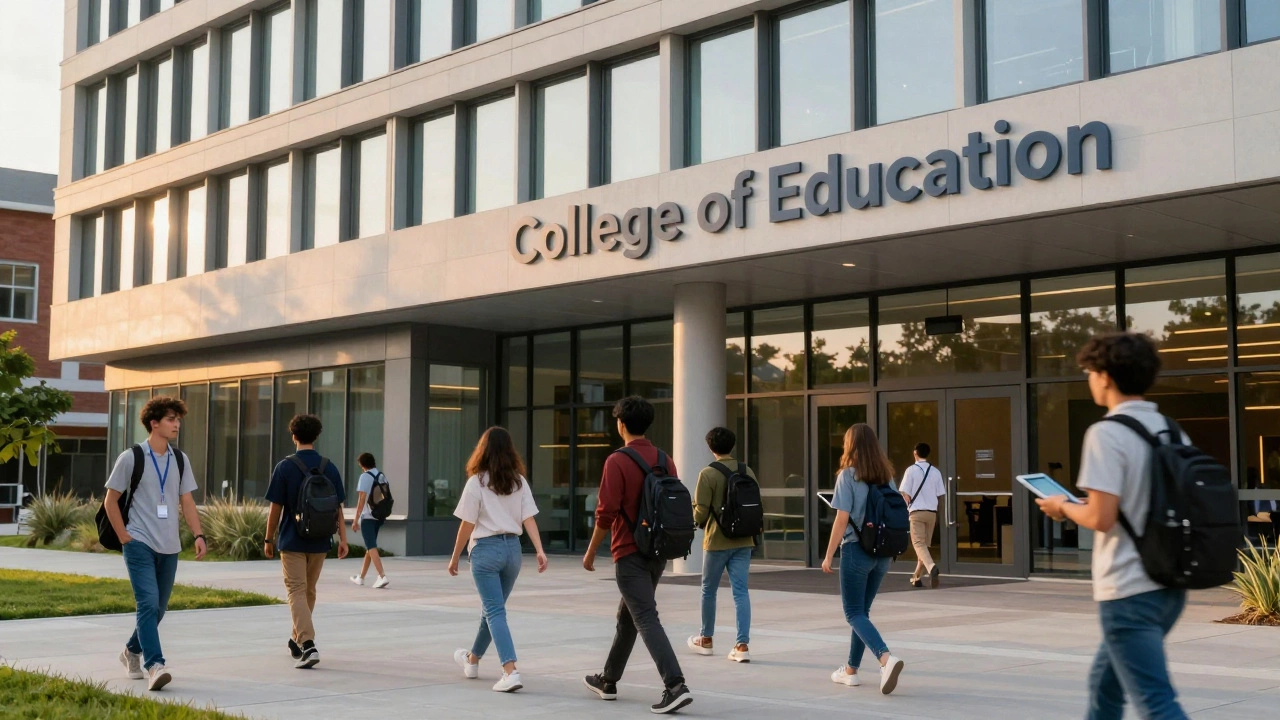
The Modern Standard: College of Education
In most universities today, especially in the United States, Canada, and Australia, the department responsible for preparing teachers is called the College of Education, which is a specialized academic unit within a university dedicated to teacher preparation and educational research. This is the most common term you will encounter when applying for undergraduate or graduate degrees.
A College of Education typically offers Bachelor of Arts (BA) or Bachelor of Science (BS) degrees in Education. For those who already have a degree in another subject, these colleges offer Master of Arts in Teaching (MAT) or Master of Education (MEd) programs. The focus here is not just on learning how to teach, but also on understanding child development, curriculum design, and educational psychology.
Why this name? It reflects the integration of teaching into higher education. Unlike standalone vocational schools, a College of Education is part of a larger university ecosystem. This allows students to take courses in other departments, such as science or literature, while studying pedagogy. It creates a well-rounded educator who knows both their subject matter and how to deliver it effectively.
The Historical Term: Normal School
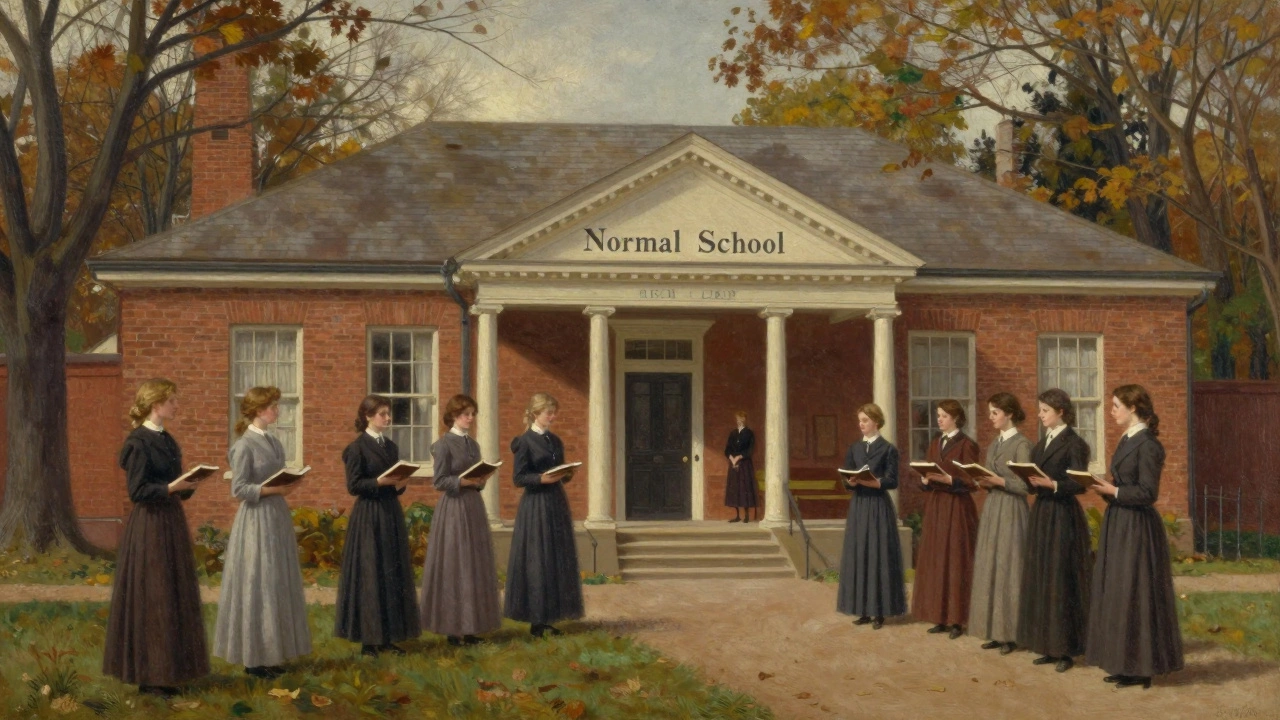
If you read older texts or visit certain historic institutions, you will see the term Normal School, which was an institution established to train primary school teachers, originating from the French 'école normale' meaning model school. This term dates back to the 17th century in France. The word "normal" comes from the Latin "norma," meaning rule or pattern. These schools were designed to establish a standard or "norm" for teaching methods.
In the United States, Normal Schools began appearing in the mid-19th century. They were practical, hands-on institutions focused on training elementary teachers. Over time, many Normal Schools evolved. Some became state colleges, and others merged with universities to form modern Colleges of Education. Today, very few institutions use "Normal School" in their official title, though some retain it in their history or alumni associations.
Understanding this term is useful because it explains the roots of teacher training. It shows that teaching has always been seen as a profession requiring standardized preparation, not just an innate talent. When you hear "Normal School," think of the early days of professionalizing education.
International Variations: Faculty and Institute
Teacher training names vary significantly across borders. If you are looking at programs in Europe or Asia, you will likely see different terminology.
- Faculty of Education: Common in the UK, Ireland, and many Commonwealth countries. This term implies a division within a university similar to a Faculty of Law or Medicine. It emphasizes the academic rigor of the field.
- Institute of Education: Used in places like London (IOE) or Singapore. An institute often suggests a specialized, research-focused center. These may be independent entities or closely affiliated with a larger university.
- Pedagogical University: In Russia and some Eastern European countries, entire universities are dedicated to education. These institutions offer comprehensive training in teaching methods, psychology, and subject-specific knowledge.
These variations reflect local educational cultures. In some regions, teaching is viewed primarily as a social service, leading to more vocational-style institutes. In others, it is seen as a scholarly discipline, hence the "Faculty" designation. Knowing these differences helps if you plan to study abroad or work internationally.
Vocational and Alternative Paths
Not all teacher training happens in a traditional university setting. There are alternative routes that carry different names.
Teaching Academy is a fast-track program designed to prepare individuals for classroom teaching roles, often including student teaching and mentorship. These academies are often run by non-profits, government bodies, or private organizations. They focus on quick entry into the profession, especially in high-need subjects like math or special education. Programs might last one year instead of four.
Another term is Residency Program, which refers to a apprenticeship-style model where new teachers learn alongside experienced mentors in real classrooms. Residencies mimic medical residencies. You earn a salary while you learn. This approach is gaining popularity because it provides practical experience immediately, rather than waiting until the final semester of a degree program.
Community colleges also play a role. They often offer Associate Degrees in Early Childhood Education. These programs prepare students for roles as preschool teachers or assistant educators. While they do not lead to K-12 certification on their own, they are a stepping stone to a bachelor's degree.
Key Differences Between Institution Types
| Name | Typical Degree Offered | Primary Focus | Duration |
|---|---|---|---|
| College of Education | BA, BS, MA, MEd | Academic theory + Practice | 4 years (Bachelor) |
| Normal School | Certificate/Diploma | Standardized teaching methods | 2-3 years (Historical) |
| Faculty of Education | BEd, PGCE | Scholarly research + Pedagogy | 3-4 years |
| Teaching Academy | Certificate/License | Rapid workforce entry | 6-12 months |
| Residency Program | Master’s/Certification | Mentorship + Classroom practice | 1-2 years |
How to Choose the Right Program Name
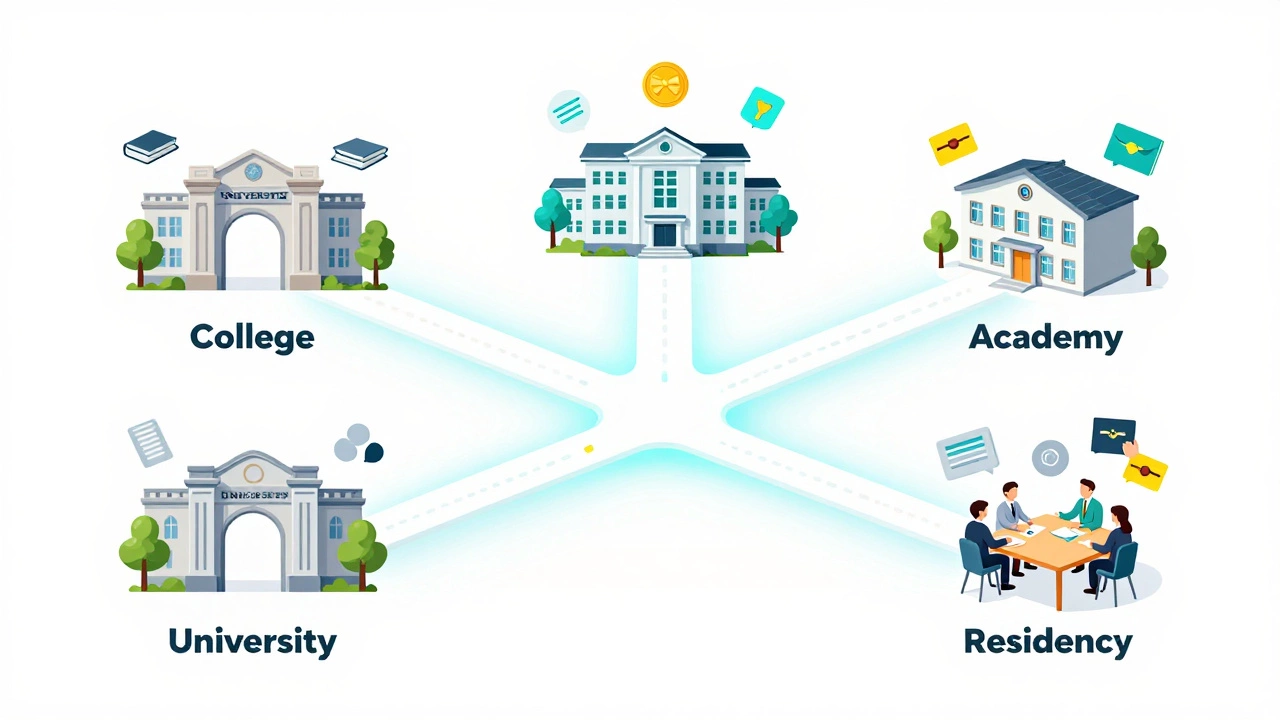
When searching for a program, the name matters less than the accreditation. Whether it is called a College, Faculty, or Academy, ensure it is accredited by the relevant national or regional body. In the US, look for CAEP accreditation. In the UK, check for recognition by the Department for Education.
Consider your current situation. If you have no degree, start with a College of Education or a Community College pathway. If you have a degree in biology but want to teach science, look for a Master of Arts in Teaching (MAT) through a College of Education or a Residency Program. If you need a job quickly in a shortage area, a Teaching Academy might be the best fit.
Also, look at the curriculum. Does the program emphasize classroom management? Lesson planning? Special needs education? The name of the institution does not tell you this. You must dig into the course descriptions. A "Faculty of Education" might be very theoretical, while a "Teaching Academy" might be purely practical. Match the style to your learning preference.
The Future of Teacher Training Names
As education evolves, so do the names of the institutions that prepare teachers. We are seeing a rise in terms like "Educator Preparation Provider" (EPP). This is a regulatory term used in the US to describe any entity approved to prepare teachers, regardless of its name. It includes universities, non-profits, and even some charter schools.
This shift reflects a broader trend. The monopoly of universities on teacher training is breaking down. New models are emerging. Online platforms offer micro-credentials. Hybrid programs combine online study with local mentoring. The name "College of Education" may remain dominant, but it will share space with more flexible, outcome-based titles.
For you, the aspiring teacher, this means more choices. You are not limited to the four-year university path anymore. You can choose a route that fits your life, budget, and learning style. Just remember to verify the quality and accreditation, no matter what the program calls itself.
Is a Normal School the same as a College of Education?
Historically, yes. A Normal School was the precursor to the modern College of Education. Most Normal Schools have since evolved into state colleges or merged with universities. Today, very few institutions still use the term "Normal School" in their official name, though the concept of standardized teacher training remains the same.
What is the difference between a BEd and a BA in Education?
A Bachelor of Education (BEd) is a professional degree specifically designed to qualify you to teach. It usually includes student teaching and pedagogical theory. A Bachelor of Arts (BA) in Education is more academic. It might focus on educational policy, psychology, or administration. A BA alone often does not lead to teaching certification without additional coursework or a master's degree.
Can I become a teacher without going to a College of Education?
Yes. Many states and countries offer alternative certification routes. These include Teaching Academies, Residency Programs, and post-baccalaureate certificates. If you already have a bachelor's degree in a subject like Math or History, you can often complete a shorter, intensive program to get licensed without enrolling in a full four-year College of Education program.
What does "PGCE" mean in teacher training?
PGCE stands for Postgraduate Certificate in Education. It is a common qualification in the UK, Ireland, and other Commonwealth countries. It is a one-year master's level course that leads to Qualified Teacher Status (QTS). It is the equivalent of a Master of Arts in Teaching (MAT) in the United States.
Are online teacher training programs respected?
Online programs are increasingly accepted, provided they are accredited. However, teaching requires practical experience. Reputable online programs will still require in-person student teaching or practicum hours. Avoid programs that promise certification with only online coursework and no classroom observation. Look for hybrid models that combine flexibility with hands-on practice.






0 Comments