Hardest IIT: Which Institute Is the Most Competitive and Why It Matters
When people talk about the hardest IIT, the Indian Institutes of Technology, a network of public engineering colleges in India known for extreme selectivity and academic rigor, they’re usually thinking about the top few—especially IIT Bombay, IIT Delhi, and IIT Madras. But the real question isn’t just which one is the toughest—it’s why some IITs demand near-perfect scores while others leave room for slightly lower ranks. The answer lies in seat count, location, placement records, and how many students fight for each spot. With only about 18,000 total seats across all 23 IITs, and over 1.5 million students taking JEE Advanced every year, the competition isn’t just fierce—it’s a numbers game where even a 1% difference in rank can mean the difference between a top IIT and a state college.
The IIT JEE, the Joint Entrance Examination, the two-stage national test required for admission to all IITs is the gatekeeper. But not all JEE toppers end up at the same place. IIT Bombay and IIT Delhi consistently have the highest cutoffs because they’re seen as the most prestigious, with the best industry connections and alumni networks. IIT Kharagpur and IIT Roorkee, while still elite, sometimes have slightly lower cutoffs because they’re older, larger, or located in less urban areas. The IIT seats, the total number of undergraduate engineering positions available across all IITs, distributed by branch and reservation category aren’t evenly spread—Computer Science at IIT Bombay might have only 150 seats, but over 10,000 applicants with ranks under 500. That’s why the hardest IIT isn’t just about difficulty of the exam—it’s about how many people are chasing the same few spots.
What makes one IIT harder than another? It’s not the syllabus. The JEE Advanced paper is the same for everyone. It’s the demand. A student with a rank of 200 might get into any IIT, but if they want Computer Science at IIT Bombay, they need to be in the top 50. That’s where the real pressure builds. And it’s not just about academics—location, campus culture, and job offers after graduation all feed into the perception of difficulty. The competitive exams India, a broad category of high-stakes entrance tests including JEE, NEET, and UPSC, known for massive applicant pools and low selection rates culture in India means students don’t just prepare for the test—they prepare for the outcome, the reputation, the future. That’s why the hardest IIT isn’t just a school. It’s a symbol.
Below, you’ll find real stories, hard data, and insider insights into what it actually takes to get into the most competitive IITs—what separates the top scorers from the rest, how seat distribution works, and why some students end up at lesser-known IITs and still thrive. No fluff. Just what you need to know before you start preparing.
 9 Dec
9 Dec
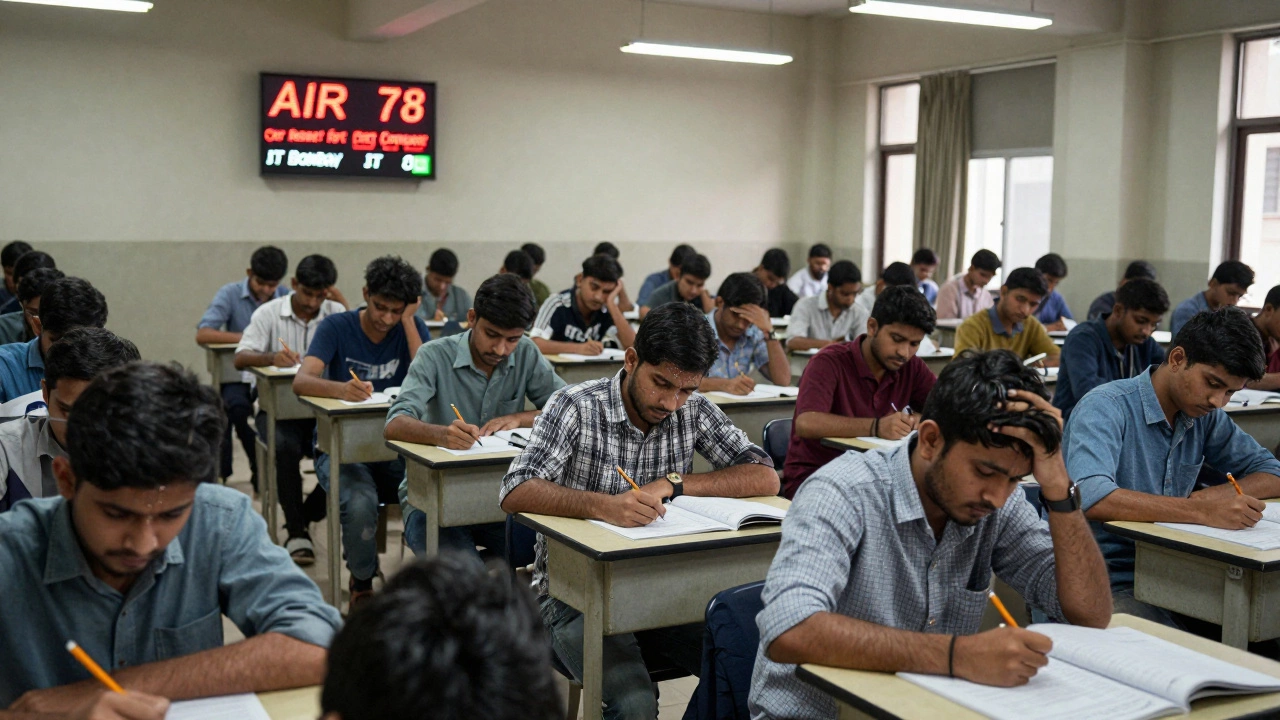
Which IIT is the Hardest to Get Into? Real Data on IIT JEE Competition
IIT Bombay is the hardest IIT to get into, with Computer Science closing at AIR 78 in 2024. Learn why cutoffs vary across IITs and how to aim for your best possible option.