CBSE 12th: What You Need to Know About the Board Exam and Next Steps
When you're taking the CBSE 12th, the final board examination conducted by the Central Board of Secondary Education for Class 12 students in India. Also known as Class 12 board exam, it's the make-or-break moment that shapes college admissions, scholarship eligibility, and even career paths across the country. This isn't just another test. It's the single most important academic milestone for over 1.5 million students every year.
The CBSE syllabus, the official curriculum set by the Central Board of Secondary Education for Class 12 covers core subjects like Physics, Chemistry, Biology, Mathematics, and Economics — all designed to test deep understanding, not just memory. Unlike state boards, CBSE follows a standardized pattern nationwide, making it the preferred choice for students aiming for national-level entrance exams like JEE, NEET, or CUET. The exam structure is predictable: 70% theory, 30% practicals or internal assessment, and a strict marking scheme that rewards clarity over flair. If you're preparing for NEET, the National Eligibility cum Entrance Test for medical courses in India, your CBSE 12th Biology and Chemistry syllabus is your primary study material — NCERT books are non-negotiable.
What happens after CBSE 12th? That’s where things get real. Your marks decide whether you get into a top engineering college, a medical school, or a competitive university program. But they don’t define your future. Many students who didn’t score 90%+ still landed great careers through vocational training, diploma courses, or overseas opportunities. The vocational qualification, a hands-on credential that proves you can do a specific job route is gaining serious traction — especially for those who learn better by doing than by memorizing. Whether you’re chasing an IIT seat or a certification in digital marketing, your CBSE 12th results are just the starting line.
Here’s what you’ll find in the posts below: real strategies for cracking the CBSE 12th exam, how to pick the right subject stream, what to do if you fail, and how to turn your board results into a launchpad — not a dead end. You’ll see how students used their scores to get into government jobs, study abroad without money, or switch to tech careers without a traditional degree. No hype. No fluff. Just what works.
 21 Nov
What Is a 12th Class Degree Called in India? Understanding the Indian School System
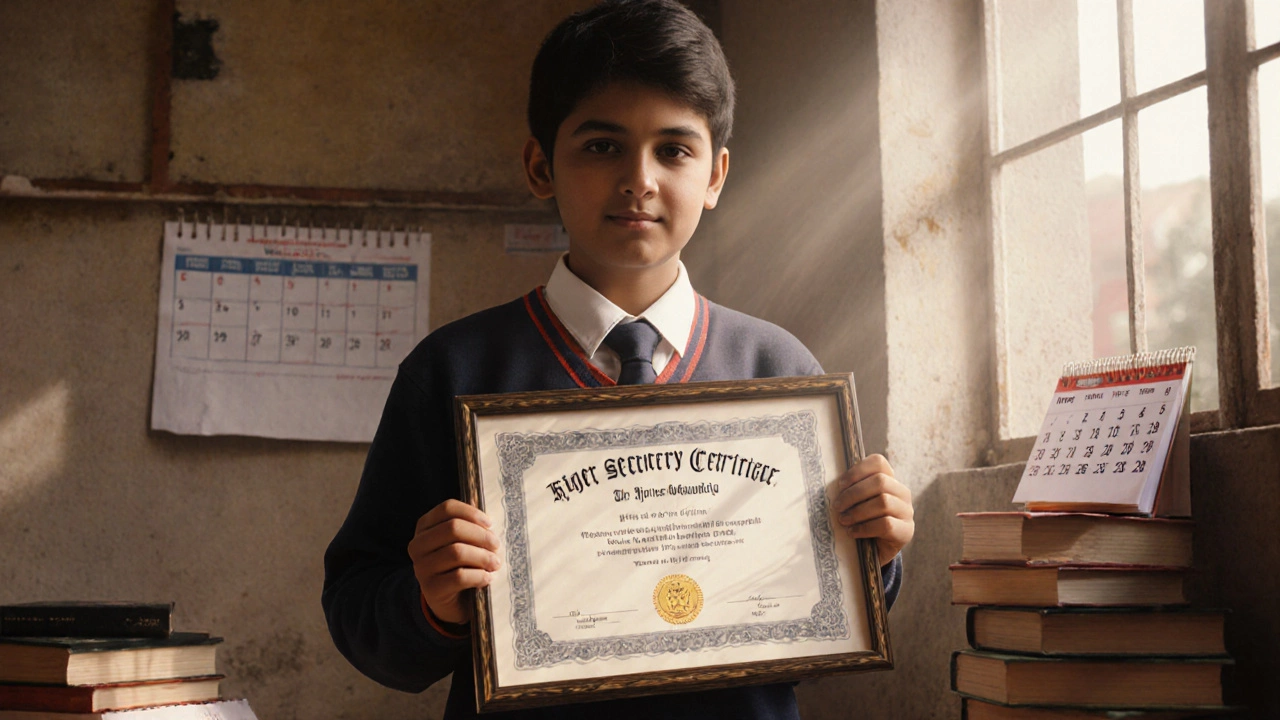
There's no such thing as a 12th class degree in India. Learn what you actually receive after Class 12, how it's used for college admissions, and why mixing up terms like 'degree' and 'certificate' can cause problems.